





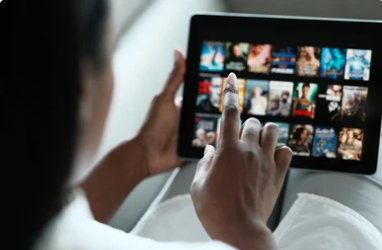
In Nigeria, the federal government announced plans to launch “FreeTV” on June 17, featuring over 100 channels dedicated to news, sports, education, entertainment, and children’s programming in various Nigerian languages. This marks a shift from the initially scheduled launch date of May 15.
During a facility tour at NIGCOMSAT, the Minister of Information and National Orientation, Mohammed Idris, along with Dr Charles Ebuebu, the Director-General of the National Broadcasting Commission (NBC), shared details of the significant project. They emphasised that the long-awaited transition from analogue to digital broadcasting is now a reality, signalling a major advancement for Nigeria’s broadcasting sector.
Idris expressed his enthusiasm for the Digital Switch Over (DSO), stating, “I have been grappling with this idea for many years. Our migration to digital has finally been achieved and will be inaugurated on June 17.” He highlighted that numerous channels have already been integrated into the new platform, envisioning a transformation in broadcasting, advertising, and television consumption across Nigeria and Sub-Saharan Africa.
He noted that the new platform will feature scientific audience measurement tools, enabling real-time tracking of viewership patterns, providing advertisers with valuable data for targeted marketing. “Now science is at play. If you are viewing a station, we know who is watching and how many people are tuned in. Advertisers can make informed decisions regarding programming preferences across different demographics,” Idris explained.
The Minister praised the collaborative efforts of NIGCOMSAT, NBC, the Ministry of Communications, and the Ministry of Information, and acknowledged President Bola Tinubu’s supportive role in facilitating this transition.
Idris explained that, unlike previous DSO attempts, which were limited by the cost of expensive encrypted set-top boxes, the new initiative will be free and accessible to millions of Nigerians. “In the past, the boxes were costly and encrypted. Now, it’s free. The government has covered those expenses for Nigerians,” he remarked.
He assured that, unlike earlier pilot phases restricted to a few urban areas, the new digital platform would ensure nationwide coverage through NIGCOMSAT’s satellite infrastructure. “Everyone can watch whatever they want, in real time, effortlessly. Free TV for everyone, everywhere,” he declared.
Idris noted that this platform could potentially challenge the monopoly of existing pay-TV providers by offering a broader range of viewing options at no cost. “I don’t want to label this as a substitute; rather, it provides opportunities that were previously unavailable. There will be competition, leading to diverse content and greater viewership,” he said.
He added that the platform will initially be available in standard definition (SD) before swiftly transitioning to high definition (HD), aligning Nigerian broadcasting with global standards. “Soon after launch, we’ll move to HD. Nigeria will now compete on a global scale. What you see here will match international standards,” Idris said.
Furthermore, he disclosed that the service is already accessible via mobile application and has successfully passed testing phases before the official launch.
During the tour, the managing director and CEO of NIGCOMSAT described the partnership with NBC as strategic, enhancing service delivery and operational standards within Nigeria’s digital broadcasting framework. She emphasised that ongoing investments and satellite expansion initiatives will ensure reliable service in the long term. “The work has only just started. This is just the beginning,” she stated.
Accompanying the Minister on the tour were several dignitaries, including Salihu Abdullahi Dembos (Director General, Nigerian Television Authority), Jibrin Baba Ndace (Director General, Voice of Nigeria), Mohammed Bulama (Director General, Federal Radio Corporation of Nigeria), and Lanre Issa-Onilu (Director General, National Orientation Agency), among other senior officials.