






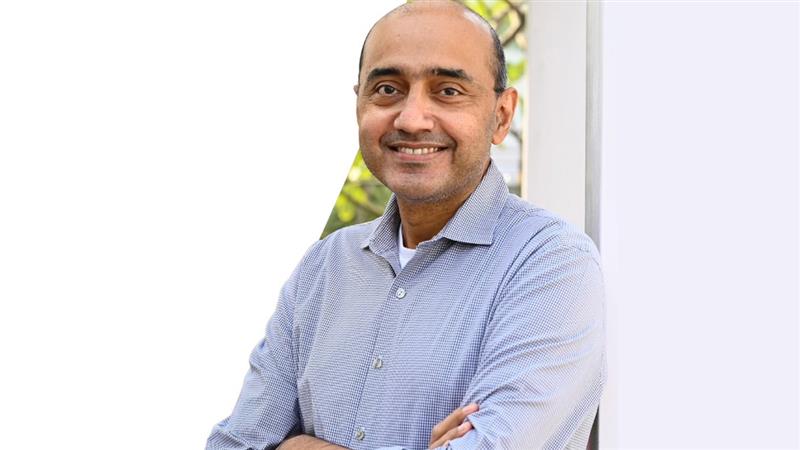
Bharti Airtel, India’s second-largest telecommunications operator, has announced that Gopal Vittal will resign as CEO in January 2026, transitioning the leadership to Shashwat Sharma, the current Chief Operating Officer (COO).
The latest quarterly results report revealed that Vittal will take on the role of Executive Vice Chairman, continuing to serve as Managing Director. He will mentor Sharma during the transition period before Sharma officially takes over as CEO and Managing Director in early 2026.
Vittal has navigated Airtel through numerous challenges over a decade of his tenure. One of the most significant hurdles was the emergence of Reliance Jio Infocomm, led by Mukesh Ambani. Jio’s launch of 4G services in September 2016, accompanied by six-month free offerings, sparked a fierce price war, significantly impacting the industry. Over the following four years, the number of telecom operators per service area dropped from 12-13 to just six by March 2020.
While Airtel managed to withstand these industry upheavals, its Average Revenue Per User (ARPU) fell sharply from ₹233 (approximately $2.76) in September 2016 to INR114 ($1.35) by March 2017, shortly after Jio’s entry. However, by September 2020, ARPU had rebounded to INR162 ($1.92).
Airtel returned to profitability in 2020 after enduring intense price competition. Vittal is credited with refocusing the company on acquiring “quality customers” instead of merely increasing subscriber numbers. This strategy also strongly emphasised attracting postpaid customers known for their loyalty and higher spending. Under Vittal’s leadership, Airtel successfully transitioned its services from 3G to 4G and is now advancing towards 5G.
The soft-spoken yet assertive Vittal has frequently addressed regulatory obstacles throughout his tenure. He identified a “consistent and enabling policy environment” as vital for the industry’s health, especially during the 2019 Interconnect Usage Charge (IUC) dispute with Reliance Jio. IUC refers to the fees one operator pays when delivering calls to another operator’s network.
In 2020, the Telecom Regulatory Authority of India (TRAI) announced plans to phase out IUC, aiming to promote new technologies like VoIP. While Jio supported the removal, Airtel and Vodafone opposed it, fearing it would disadvantage them. TRAI subsequently extended the IUC beyond 2020, reducing the rate to INR 0.06 ($0.0007) per minute, a decision Airtel criticised.
Another significant issue during Vittal’s leadership was the Adjusted Gross Revenue (AGR) controversy, which raised questions about including non-telecom revenues in the AGR calculation, essential for determining government payments. Following a Supreme Court ruling in October 2019 mandating that non-telecom revenue be included, telecom companies faced enormous debts due to retrospective AGR dues.
More recently, Vittal has candidly addressed the complexities of monetising 5G. He remarked, “The architecture of pricing in India is quite broken because people who can afford to pay a lot more are paying a lot less due to these unlimited plans, which effectively serve as a one-size-fits-all solution.”
One area where Vittal could have pushed for more progress is fostering a culture of innovation within Airtel. Despite being the leading service provider when he took over in 2013, Airtel has not sufficiently positioned itself as a technological pioneer. While Airtel adopted more conservative strategies, Jio has advanced its 5G network technology, targeting international markets.
Moreover, Airtel missed the opportunity to adapt to the growing demand for fixed broadband, especially highlighted during the COVID-19 pandemic when the need for home connectivity soared.
Additionally, there was the net neutrality controversy in 2014-15, when Airtel announced plans to charge extra for VoIP services. This led to significant backlash and a national debate on net neutrality, prompting the company to reverse its decision.
As Airtel approaches this leadership transition, Vittal’s legacy of resilience and strategic pivoting continues to shape the company’s future.