







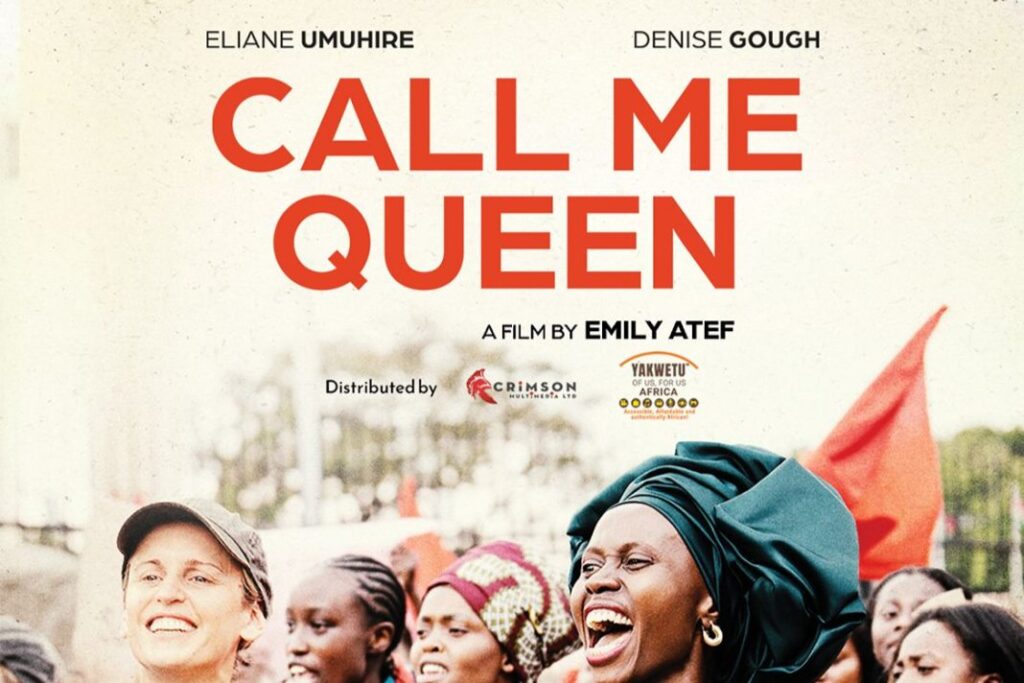
The Kenya-set drama Call Me Queen, which explores the HIV/AIDS crisis of the 1990s and unequal access to life-saving treatment, will open in cinemas across Kenya, Rwanda, Tanzania and Uganda on 30 October 2026, before launching online through YAKWETU on 13 November.
The release dates follow the film’s Kenyan premiere at the NBO Film Festival on 17 October at Prestige Cinema on Ngong Road in Nairobi. Producer Gian Piero Ringel, director Emily Atef and lead actress Eliane Umuhire attended the screening alongside Kenyan cast members. .
Adapted from Lara Santoro’s novel Mercy, the film follows Queen Achungo, played by Umuhire, a Rwandan refugee and single mother living in Nairobi’s Korogocho neighbourhood. After discovering that she is HIV-positive, Queen’s personal struggle develops into a broader fight for affordable medication, bringing questions of poverty, pharmaceutical patents, racial inequality and political responsibility into focus. Atef co-wrote the screenplay with Hawa Essuman, Josune Hahnheiser and Jeannine Dominy.
The international cast includes Denise Gough, Charlie Carrick, Dominic West, Laurent Lafitte and Danny Sapani, alongside Kenyan performers Michelle Tiren, Nice Githinji, Lwanda Jawar, Helen Keli, Peter Kawa and Eddie Kimani. The production brings together Ringel Film, Les Films Pelléas, Cowboy Films and Streetcar Productions, with Zischlermann Filmproduktion, Construction Film and Ascent Films as co-producers.
Regional distribution is being handled by Crimson Multimedia and YAKWETU. Trushna Buddhdev-Patel, managing director of Crimson Multimedia and co-founder of YAKWETU, said the film “deserves to be watched widely”, explaining the decision to combine cinema screenings with an online release for audiences who may not have convenient access to theatres. The film is also dedicated to Kenyan producer Appie Matere, who worked on the project before her death. .
For East Africa’s film industry, the staggered launch offers a practical example of how regional theatrical distribution can be paired with a local digital platform. Releasing the film in four national markets before moving online gives the distributors an opportunity to reach cinema audiences first, then extend access beyond theatre locations and screening schedules.
The distributors are also seeking partnerships for impact screenings addressing HIV/AIDS prevention, detection and treatment, healthcare access and women’s empowerment. Such initiatives could extend the film’s reach beyond entertainment into community engagement, although their scale will depend on the partnerships established.
The release will provide a further test of how African and international co-productions can reach audiences across national borders through coordinated distribution. Its theatrical-to-streaming schedule also places YAKWETU in a role that connects regional cinema exposure with subsequent digital availability.