







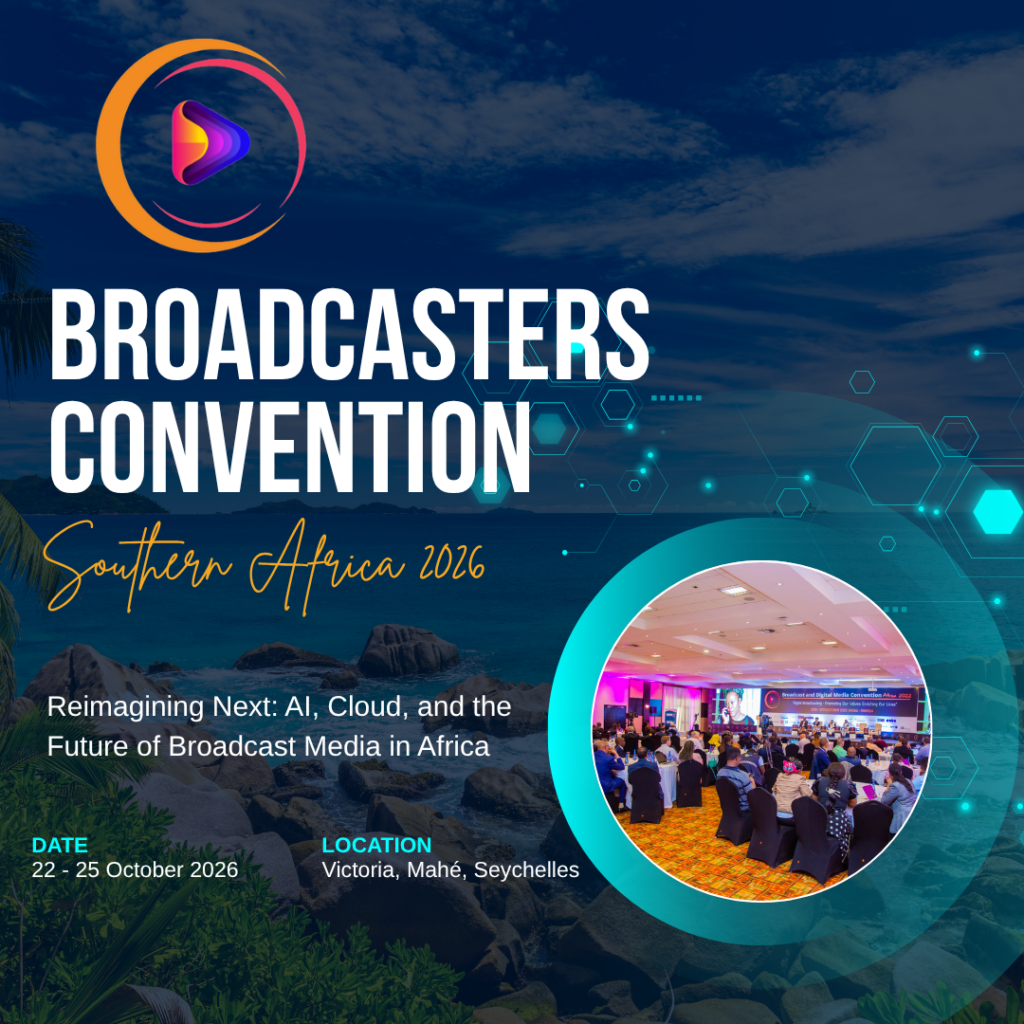
African broadcasters have been urged to strengthen collaboration and pursue collective strategies to address the growing influence of global technology platforms, artificial intelligence (AI) and digital distribution, as the second day of the Broadcasters Convention – Southern Africa 2026 continued in Seychelles.
Day Two brought together broadcasting leaders and industry experts to examine how African media organisations can strengthen their negotiating power, protect their intellectual property and secure greater value from their content in an increasingly digital media environment.
The opening leadership discussion highlighted the potential benefits of collective bargaining, including improved access to cloud infrastructure and AI technologies, more favourable commercial terms and stronger influence over the conditions governing digital content distribution.
Participants emphasised that broadcasters should move beyond negotiating discounts to address wider questions of technology ownership, data control, infrastructure investment and the long-term sustainability of African broadcasting. Collaboration among public broadcasters, supported by existing regional and continental structures, was identified as a possible route towards a stronger and more coordinated industry voice.
The discussion also highlighted the importance of developing homegrown AI solutions that reflect African languages, cultures and contexts. Speakers stressed that broadcasters must build the skills, policies and safeguards needed to adopt AI responsibly while maintaining editorial independence, journalistic credibility and control over their content.
Cybersecurity emerged as another critical priority, with delegates examining the risks associated with increasingly connected broadcasting operations, IP networks and the adoption of cloud-based services and AI tools.
The session on cybersecurity and IP networks underscored that cyber threats extend beyond traditional IT systems, presenting wider business and operational risks. Speakers highlighted the importance of protecting both technology and people, strengthening organisational security practices and encouraging cooperation across the industry to address evolving cyber threats.
Discussions on digital transformation explored how broadcasters can modernise their operations while working within existing infrastructure and budgetary constraints. The emphasis was on selecting appropriate technologies, improving operational efficiency and sharing practical lessons that can help broadcasters achieve more with available resources.
The convention also examined the economics of digital broadcasting, focusing on the financial considerations involved in scaling digital operations. Delegates considered the need to balance investment in new technologies with affordability, sustainable growth and long-term operational efficiency.
The programme further explored how broadcasters can reinvent audiovisual content distribution to meet changing audience expectations in the age of AI and streaming.
Discussions highlighted the importance of understanding audience needs, local conditions and connectivity constraints when selecting distribution strategies. Speakers noted that streaming is not a universal solution for every market, reinforcing the need for flexible approaches that reflect differences in infrastructure, affordability and audience access.
The sessions collectively reinforced the importance of aligning technological innovation with the realities of African broadcasting markets, ensuring that digital transformation strengthens the industry’s ability to serve audiences and sustain locally relevant content.
Commenting on the discussions, Mr Benjamin Pius, CEO of Broadcast Media Africa (BMA), said, “The conversations taking place at this convention reinforce the importance of African broadcasters working together to shape the future of our industry. As AI, global digital platforms and new distribution models continue to transform broadcasting, we must ensure that African broadcasters have a stronger collective voice, protect the value of their content and negotiate from a position of strength. Collaboration will be essential to building a more resilient, innovative and sustainable broadcasting sector that reflects Africa’s interests and serves its audiences.”
The Broadcasters Convention – Southern Africa 2026 was convened by Broadcast Media Africa (BMA), in partnership with the Southern African Broadcasting Association (SABA), with the Seychelles Broadcasting Corporation (SBC) serving as host.
The convention provides a platform for broadcasters, policymakers, technology providers and industry stakeholders to exchange knowledge, explore practical solutions and strengthen collaboration around the future of broadcasting in Africa.
The message from Day Two was clear: African broadcasters will need stronger partnerships, responsible technology adoption, resilient infrastructure and coordinated industry action to protect their interests and remain competitive in the evolving global media landscape.