






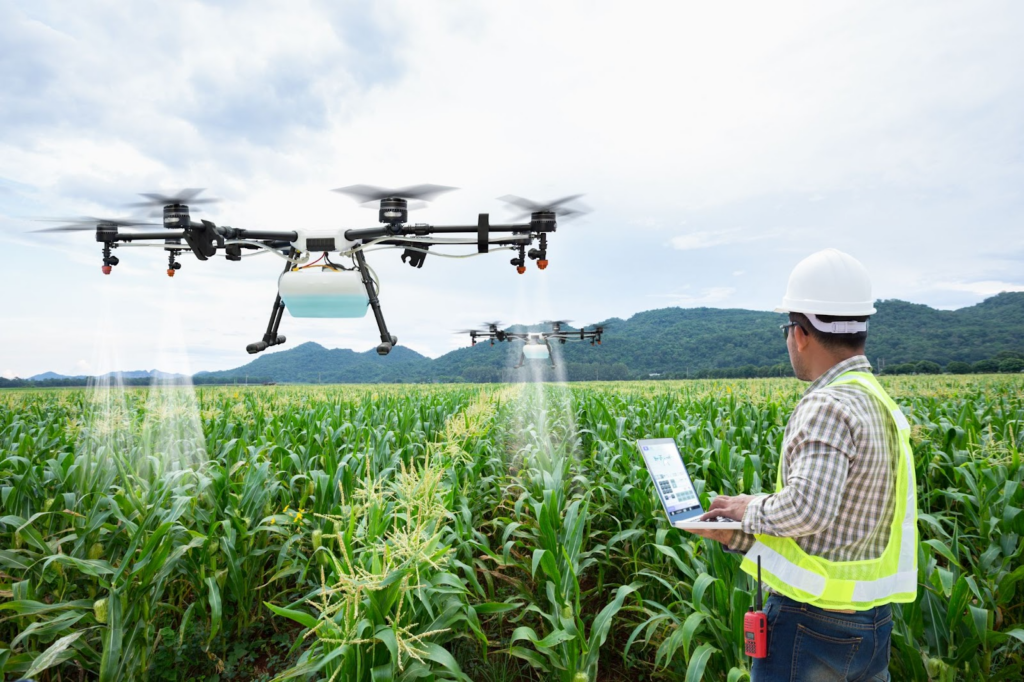
BALFOUR, SOUTH AFRICA – As the world struggles to deal with the ongoing conflict in the Middle East and the de facto blockade of the Strait of Hormuz, South African farmers are “thinking outside the box” to ensure national food security. In Balfour, the traditional sounds of large, diesel-hungry farm equipment are increasingly giving way to the hum of high-tech farm drones, used for precision farming and irrigation.
Video footage obtained on Thursday at a farm in Balfour illustrates this trend. There, rows of high-clearance farm sprayers, capable of burning up to 400 litres of diesel fuel every day, are no longer needed as farm drones take to the skies. The drones, a major leap forward in fuel efficiency, use only 60 litres of fuel per day to cover the same area as the sprayers.
“It’s definitely worthwhile,” says Bester, a local farmer. “You need to think outside the box and explore alternative options to be more effective with what you have available.”
This shift towards an automated system is coming at a time when the agricultural sector in South Africa is facing a “nightmare” scenario, characterised by rising costs and severe shortages. Due to the escalation of the war in Iran and the resulting disruption to maritime transport, oil prices have risen to over $100 per barrel.
This is not the only cost, however, as the country imports 80% of its fertiliser, much of which is being held back by maritime transport issues. Bester stated, “Out of all these bins, I’ve only got one 10,000-litre container full of fertiliser. If I’m not able to get access to the fertility I need, it’s going to be difficult to achieve the type of yields I’m getting.”
This is especially significant as the harvest season approaches, and the agricultural sector is looking to precision and cost-effective spraying not only as an innovative system but also as a means of survival, given the increased global pressure on the sector.
View the full video report below;
[This current affairs report item is provided as part of Broadcast Media Africa (BMA)’s mandate to keep Africa’s broadcast media audiences and stakeholders informed on international developments in local and global humanitarian and public service broadcasting.]