






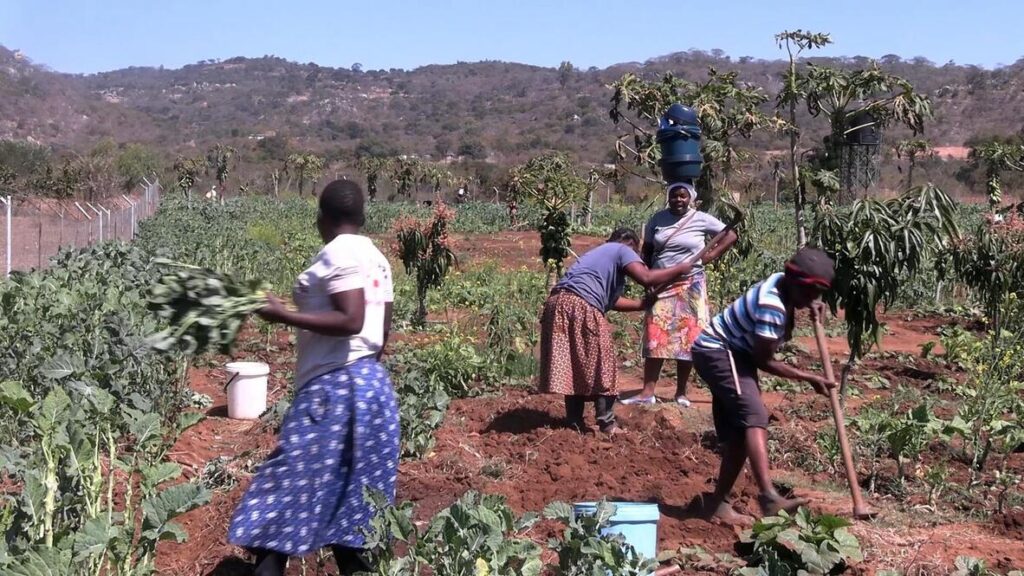
MANICALAND, ZIMBABWE — Smallholder farmers in eastern Zimbabwe have adopted a sustainable, community-based solar-powered irrigation scheme to mitigate the challenges of drought and irregular rainfall.
In the Mutekwatekwa Community Garden in the village of Chitiyo, 50 farmers use solar power to pump water for growing crops. The garden, formed in 2023, is a joint effort between the local community and USAID’s Takunda program, implemented by CARE over five years.
Zimbabwe’s agricultural sector plays a critical role in the country’s economy, providing employment to more than 80 per cent of rural Zimbabweans and contributing 17 per cent of GDP. However, prolonged dry spells make crops vulnerable to failure. The combination of underground water and solar power enables farmers to grow healthy crops without incurring high expenses on chemical fertilisers, instead using organic manure from cattle and goats.
In addition to high yields, the garden offers more than just food produce. The produce goes directly to feed family members, while excess is sold in cities near the project area.
“The benefit of having this garden is that people can afford schooling for their children and others can feed their children on a four-star diet,” said Beauty Manomano, a local farmer, adding that there has been an increase in health and a decrease in cases of kwashiorkor among children.
The project has also economically liberated women in the community. “They can afford cattle and join savings and loan clubs,” said Lydia Mushanjirwa, a farmer.
Overall, Mutekwatekwa is a model of climate adaptation in rural Africa.
View the full video report below
[This current affairs report item is provided as part of Broadcast Media Africa (BMA)’s mandate to keep Africa’s broadcast media audiences and stakeholders informed on international developments in local and global humanitarian and public service broadcasting.]