


• Latest
Nigeria Looks Towards 6G Connectivity And Its Revenue Potential

Nigeria Looks Towards 6G Connectivity And Its Revenue Potential

February 5, 2025
Strengthening Preservation: BMA Webinar To Address Risk Identification & Assessment In Audio-Visual Archives

BMA Webinar To Explore Broadcast Archives And Safeguarding Africa’s Audio-Visual Heritage

May 21, 2026
AI As A Media Industry Driver: Sputnik’s Experience

Broadcasters, Regulators And AI Experts Examine The Future Of Responsible AI In African Media

May 21, 2026
Redefining Content Delivery: MTN’s Bold Move Into TV Streaming

Disney+ Price Hike Signals Changes In South Africa’s Streaming Landscape

May 21, 2026
African Diaspora International Film Festival To Showcase Diverse Global Stories

South African Talent Shines Brightly At Cannes Film Festival 2026

May 21, 2026
Rights: SABC, StarTimes Secure Broadcast Rights For AFCON 2023 

Groundbreaking Broadcast Agreement Brings Olympics To Sub-Saharan Africa

May 21, 2026
Accelerating Universal Delivery Of Fully-Digital Broadcasting Services To All Nigerians

Viory Strengthens Commitment To African Media Industry Through Strategic Partnership With Broadcasters Convention – East Africa 2026

May 20, 2026
Ghana Highlights Vision For Digital Innovation And Leadership In Tech

African Broadcast Industry Calls For Responsible AI Adoption Amid Growing Regulatory Pressures

May 20, 2026

South Africa: Studiocanal Partners With Sun Africa On Theatrical Distribution

May 20, 2026
For The Community, By The Community – Enhanced Digitally

Zambia: Empowering Youth Through Community Radio

May 20, 2026
South Africa: Blue Label Telecoms Secures ICASA Approval For Cell C Licence Transfer

Safaricom Secures 25-Year Operating Licence, Fortifying Its Future In Kenya’s Telecom Sector

May 20, 2026
Knowledge, Resources And Assets From The Radio And Digital Sound Broadcasting Summit – Africa 2025 Now Available

Future Of Radio: Subscription Vs Advertising In Africa’s Digital Radio Ecosystem

May 19, 2026
Smart Broadcasting AI Data And The Future Of Engagement

“Innovation Without Governance Becomes Institutional Risk” – African Media Leaders Examine AI And Broadcast Compliance

May 19, 2026
Thursday, May 21, 2026
Broadcast Media Africa
  • Home
  • News & Reports
  • Resources
  • Services
    • Promo: Spotlight Service
  • Events
  • Community
No Result
View All Result
BMA
  • Home
  • News & Reports
  • Resources
  • Services
    • Promo: Spotlight Service
  • Events
  • Community
BMA
Join BMA Network
No Result
View All Result
Home Connectivity

Nigeria Looks Towards 6G Connectivity And Its Revenue Potential

February 5, 2025
Reading Time: 2 mins read
A A

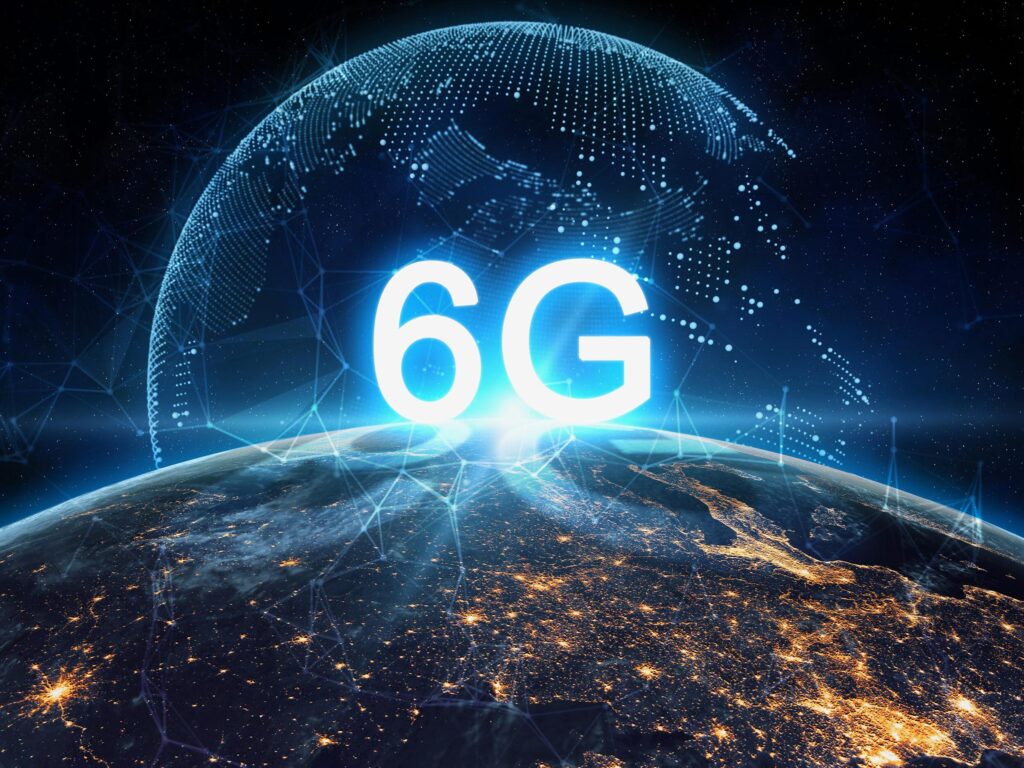
According to reports reaching this platform, the Nigerian Communications Commission (NCC) is already considering the launch of sixth-generation mobile technology (6G), which it believes could generate up to US$1 billion in revenue for the government.

This announcement was made recently by Aminu Maida, the NCC’s executive vice president, during the presentation of the institution’s 2025 budget to the joint telecommunications committee of the National Assembly.

“6G promises ultra-fast data rates with lower latency, significant energy efficiency, and greater reliability. While 6G applications are yet to be defined, this new generation aims to reach global connectivity, sensing connectivity, immersive communications, and critical services, among several other potential use cases throughout a hybrid and diverse technology approach,” explained the Global System for Mobile Communications (GSMA).

However, it’s important to note that the technology is still developing. At this stage, regulators, ministries, operators, suppliers, and researchers focus on defining the spectrum policy for 6G. The GSMA predicts that 6G will become the dominant mobile technology in the 2030s.

In the meantime, 5G accounted for only 2.46% of Nigeria’s 164.9 million mobile subscribers as of December 2024, a little over two years after the technology was first launched. In comparison, 4G comprised 47.20%, 3G represented 8.75%, and 2G accounted for 41.59%. When it comes to coverage, 2G, 3G, 4G, and 5G covered 94.1%, 89.4%, 84.2%, and 11.8% of the Nigerian population in 2023, respectively, according to the International Telecommunication Union (ITU).

Operators will need to invest in expanding 4G and 5G networks. According to Swedish equipment provider Ericsson, the initial cost of rolling out 5G in a country ranges from $3 billion to $8 billion, with an additional investment of 20% to 35% for network expansion. Moreover, operators will require an extra US$150 million to extend 4G coverage to 94% of the population, reaching 9 million more people, according to GSMA. The recent 50% hike in telecom service tariffs approved by the NCC will likely support this expansion.
Share Tweet Post Email
Tags: 6G NetworkConnectivityNigerian Communications Commission (NCC)
Share198Tweet124
Previous Post

Connectivity: Liberia, Sierra Leone And The Gambia Launch Landmark Free Roaming Agreement

Next Post

Egypt: Vodafone Strengthens Entertainment Offerings With Renewed Partnership Key Platforms

Publisher
-
Benjamin Pius
Publisher
-
Benjamin Pius

 About us

Our goal is always to keep industry stakeholders abreast of opportunities in technology and service innovations that are and will shape Africa’s broadcasting and media industry via quality news, information, intelligence and insight .

 Contact us

+44 (0) 207 712 1526
info@broadcastingandmedia.com
BSP Communications Limited
Level 37, One Canada Square
Canary Wharf
London, E14 5AB, United Kingdom

No Result
View All Result
  • Home
  • News & Reports
  • Resources
  • Services
    • Promo: Spotlight Service
  • Events
  • Community
This website uses cookies. By continuing to use this website you are giving consent to cookies being used. Visit our Privacy Policy.