






Across Africa’s broadcasting and electronic media landscape, two things remain true. One, satellite content distribution remains the premier technology that reaches every household, every transmitter site and every remote community at a single, predictable cost; and two, cloud infrastructure is transforming what happens before the signal leaves the building.
Hence, the broadcasters that are thinking hardest about how these two layers now fit sustainably together are, in my opinion, the ones quietly building the most defensible positions in the ecosystem!
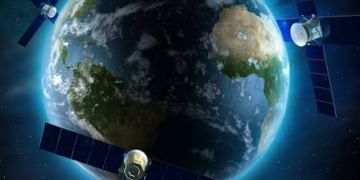
The reality is that satellite technology itself is being reinvented. What we have seen is that high-throughput satellites are bringing down cost per channel and per megabit. And these days, with software-defined satellites, your providers can easily reallocate capacity as demand shifts, rather than broadcasters being locked into rigid, decades-long transponder arrangements.
So for many broadcasters, next-generation satellite is no longer simply a transmission bill — it is the instrument through which national reach, and therefore national advertising value, is achieved.
On the other side of the coin, cloud-based platforms have presented totally new and innovative ways of doing things for broadcast professionals. For example, playout, graphics, master control and channel origination can and are now running as software — that can be scaled up for elections and tournaments, and scaled down afterwards, with broadcasters treating these now as opex rather than capex.
Nowadays, a TV or radio channel that once took months and serious capital to launch can be stood up in a week — with pop-up channels, FAST channels and event-driven services all becoming affordable bets rather than board-level gambles.
The winning strategy then derives from the hybrid workflow where cloud-based operations that feed satellite distribution give every broadcaster redundancy in both directions: if terrestrial links fail, satellite carries the service; if a facility goes dark, the channel plays out from the cloud.
However, the practical questions for many broadcasters remain, and they are genuinely difficult: how to negotiate modern satellite capacity agreements, which workloads belong in the cloud and which do not, how to manage data costs and sovereignty, and how to sequence migration without risking what is already on air.
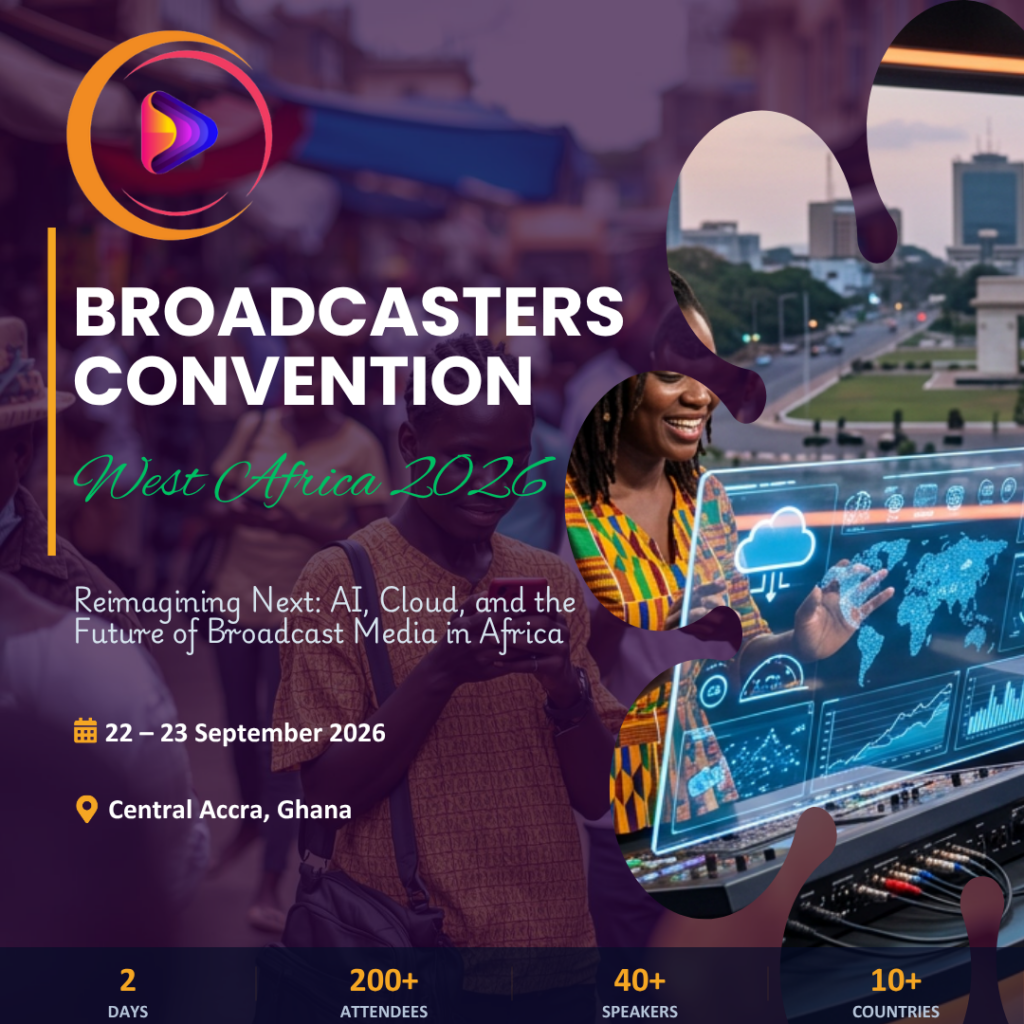
These are the conversations that industry leaders across the continent will seek to address during the upcoming Broadcasters Convention – West Africa 2026, which will convene in Accra this September.
It is worth noting that broadcast infrastructure rarely makes headlines, but it really is what decides who gets to compete — especially within the African operational landscape. The African broadcasters that treat reach and resilience as key and urgent priorities — and then build the hybrid architectures to deliver them — will be the ones still standing, still on air and still selling when the next disruption arrives.
This article is written by Benjamin Pius (Publisher @ BMA) as part of the forthcoming Broadcasters Convention – West Africa 2026, 22–23 September 2026, Labadi Beach Hotel, Accra, Ghana. | Register to attend: wab-africa.broadcastingandmedia.net