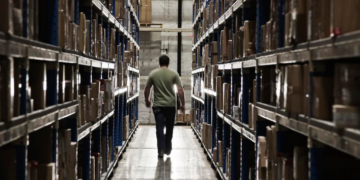







This is probably no news: every established broadcaster in Africa is sitting on a vault – decades of news footage, dramas, music performances, sporting moments and national milestones that exist nowhere else on earth.
Yet, for too many broadcast facilities – especially across Africa- that vault is a storeroom of deteriorating tapes in formats no working machine can still play, held in heat and humidity that accelerate their decay. This is the slow-motion loss of both a continent’s audiovisual memory and one of the most undervalued commercial assets in African media.
It is well acknowledged that the window to act is closing; however, the good news is also that the tools now available inside that window have never been stronger.
For example, robotic digitisation lines and format migration services have dramatically reduced the cost of rescuing legacy tape. Also, cloud and hybrid storage architectures now offer broadcasters tiered, geographically redundant preservation without the capital burden of building climate-controlled vaults.
And, most transformative of all, artificial intelligence (AI) has solved archiving’s oldest problem: metadata — with speech-to-text engines, facial and scene recognition, and automated tagging — increasingly capable in African languages — enabling it to catalogue in weeks what teams of librarians could not complete in decades. Now, an asset that once required institutional memory to locate can be found with a search bar.
Protection is the third leg and inseparable from the other two. Digital rights management, forensic watermarking and content-recognition tools allow broadcasters to trace and challenge the unlicensed use of their material across digital platforms — a discipline that becomes more urgent as generative AI systems are trained on scraped audiovisual content. A broadcaster that has not digitised, catalogued and rights-cleared its archive cannot prove ownership, cannot enforce it, and cannot negotiate from strength.
The commercial opportunities from all the above are real.
For example, restored and catalogued archives can feed FAST channels and streaming libraries at a fraction of the cost of new commissions. In addition, documentary makers, international news organisations, educators and brands pay real money for unique historical footage.
But for African broadcast professionals and executives, some practical questions persist: what to digitise first, how to fund it, which technologies to trust, and how to turn preservation into profit?
The vault is the asset. Every year of delay makes it smaller. The broadcasters that treat their archives as capital — to be preserved, protected and put to work — will discover they have been sitting on their most bankable content all along.
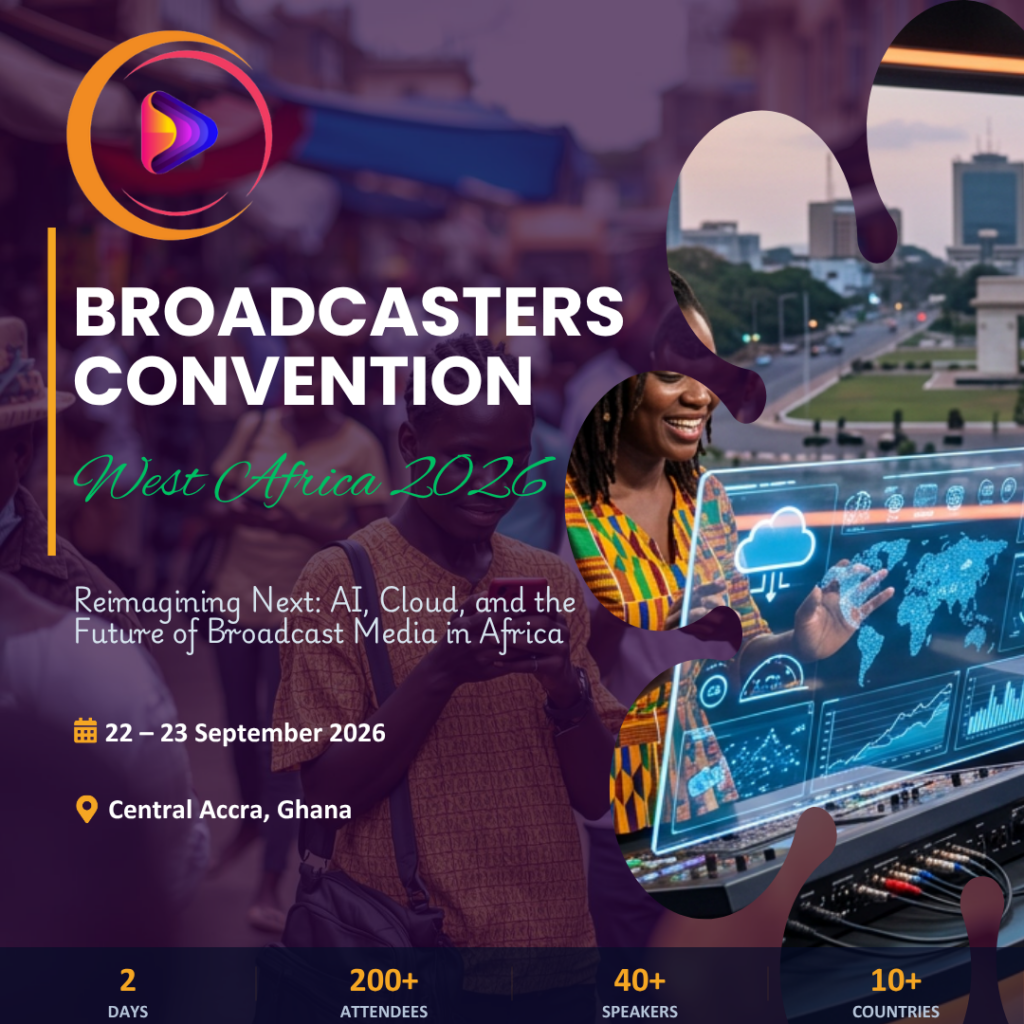
This article is written by Benjamin Pius (Publisher @ BMA) as part of the forthcoming Broadcasters Convention – West Africa 2026, 22–23 September 2026, Labadi Beach Hotel, Accra, Ghana.