





As the lines between traditional broadcasting, streaming, podcasting, and on-demand audio services continue to blur, the future of broadcast licensing has emerged as one of the most significant regulatory challenges facing the radio industry.
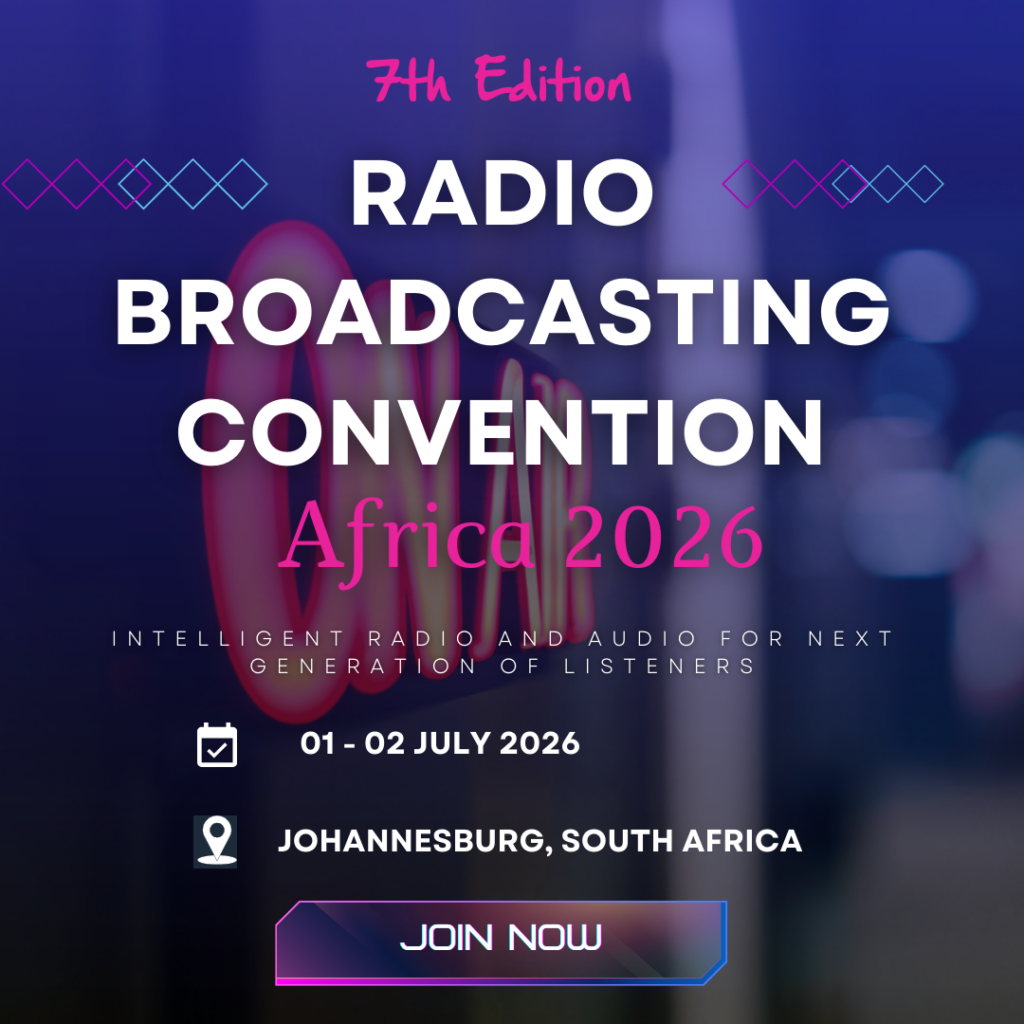
To address this critical issue, the Radio Broadcasters Convention – Africa 2026, taking place on 01 – 02 July 2026 at The Venue, Green Park, Johannesburg, South Africa, will convene industry leaders, regulators, policymakers, legal experts, and broadcasters for a high-level discussion on “Broadcast Licensing In The Digital Age – Navigating The Evolving Rules For Online, On-Air, And On-Demand.”
For decades, broadcasting licences were developed for a media environment where content was delivered through clearly defined terrestrial and frequency-based platforms. Today, however, broadcasters are operating across multiple channels simultaneously, including FM and AM radio, internet streaming platforms, mobile applications, podcasts, smart speakers, social media networks, and on-demand audio services. This shift is challenging long-established licensing models and forcing regulators and industry stakeholders to rethink how broadcasting services should be defined, authorised, and regulated.
The discussion will examine whether existing licensing frameworks remain suitable for a converged media environment in which audiences increasingly consume content across platforms. It will explore the growing regulatory complexities surrounding digital audio services, including the licensing of online broadcasters, cross-border content distribution, platform accountability, content obligations, and the regulatory treatment of emerging audio media providers.
A key focus of the session will be the need to strike an appropriate balance between fostering innovation and maintaining effective regulatory oversight. As broadcasters expand their digital footprints, many are navigating a patchwork of regulations that were not originally designed for today’s borderless, platform-driven media ecosystem. The industry is therefore seeking greater clarity on how licensing requirements can evolve without stifling growth, competition, or technological advancement.
Participants will also explore how regulators across Africa are responding to the rapid evolution of audio media and whether new licensing approaches are needed to accommodate hybrid broadcasting models that combine traditional transmission with digital and on-demand distribution. Discussions will consider the implications for market entry, spectrum management, content regulation, public service obligations, and competitive fairness in an increasingly diversified audio marketplace.
With digital transformation accelerating across the continent, the future of broadcasting will depend not only on technological innovation but also on regulatory frameworks’ ability to adapt to changing realities. The session aims to provide practical insights into how licensing systems can remain relevant, flexible, and effective while supporting the continued growth of Africa’s broadcasting sector.
The Radio Broadcasters Convention – Africa 2026 will provide an important platform for stakeholders to engage in meaningful dialogue on the policies and licensing models that will shape the future of radio and audio broadcasting across Africa.