







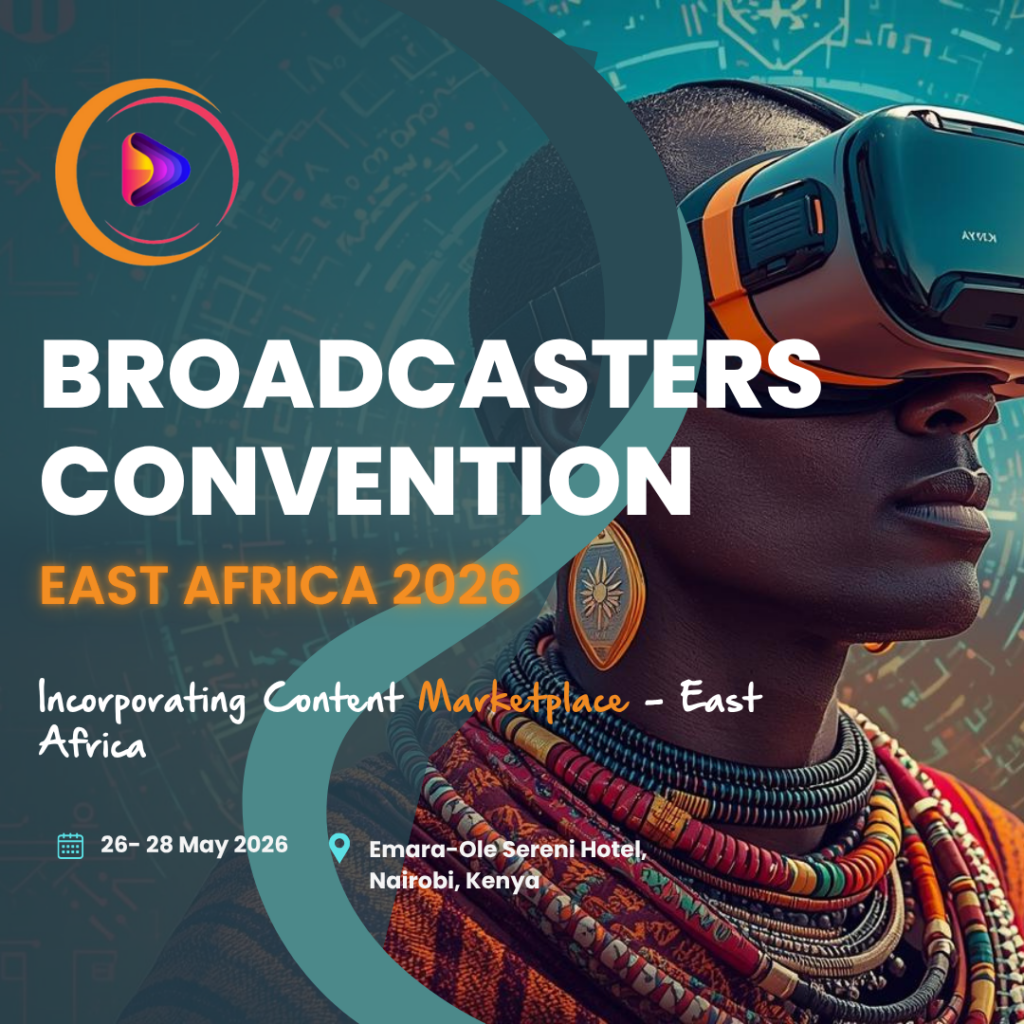
The 5th East African Broadcasters Convention closed yesterday, 27th May 2026, in Nairobi, following two days of high-level discussions, expert panels, and industry commitments under the theme “Reimagining Next: AI, Cloud and the Future of Broadcast Media in Africa.” The convention brought together broadcasters, regulators, content creators, technologists, and policymakers from across the region to confront the opportunities and challenges of a rapidly digitising media landscape.
From analogue to algorithm: a sector in transformation
The convention opened by tracing the arc of African broadcasting — from the early days of state-controlled radio, through the establishment of institutions like Kenya Broadcasting Corporation (KBC), to today’s fragmented, multi-platform media ecosystem. Speakers underscored that the industry now operates at the intersection of artificial intelligence, cloud infrastructure, and an exploding demand for locally relevant content.
DTH satellite broadcasting unlocks rural reach
A headline presentation by Menen Agegnehu, Country Manager for Ethiopia and Sales Manager for Eastern Africa at SES Satellite, made the case for Direct-to-Home (DTH) satellite broadcasting over Digital Terrestrial Television (DTT). Agegnehu cited Ethiopia’s transformative growth from 3.7 million TV homes in 2017 to 18 million in 2023 as evidence that DTH can leapfrog infrastructure constraints in rural and remote areas. Delegates agreed that the future lies in a smart combination of DTH, OTT, and digital platforms tailored to Africa’s diverse geographies and audiences.
Cloud broadcasting: opportunity and sovereignty
A dedicated panel on data sovereignty surfaced the tensions inherent in cloud migration. Joel Waweru of the Digital Broadcasters Association of Kenya highlighted the cost efficiencies unlocked by cloud solutions while raising concerns about data control and compliance under Kenya’s Data Protection Act. Timothy Wanyonyi of the Media Council of Kenya called for updated regulatory frameworks that keep pace with technological change, a view echoed by Innocent Nahabwe of NAB Uganda, who stressed the need for regional harmonisation of data and privacy laws.
“Regulators and policymakers need to update laws and enhance enforcement to address the challenges posed by cloud broadcasting — the window to act is now.” — Panel on Data Sovereignty and Cloud Broadcasting.
Fighting piracy: a collective responsibility
Content protection emerged as one of the convention’s most urgent themes. Mike Strano of Yakwetu/Partners Against Piracy outlined practical measures, including encrypted flash disk distribution, Digital Rights Management (DRM) tools, and advocacy for ISP-level site-blocking. James Smart of Nation Media Group shared strategies for combating content theft through audience engagement and rights management. Rebecca Hunde of the Ethiopian Media Women’s Association called on African media associations to strengthen collective action against piracy and content duplication, while Tabitha Mutemi of APB committed to engaging political leadership — including engagement with the Senate — to elevate convention recommendations into legislative action.
AI in the newsroom: augment, don’t replace
Across multiple sessions, a clear consensus emerged: artificial intelligence must enhance editorial judgement, not supplant it. France Médias Monde’s approach — emphasising editorial independence, data security, and human oversight — was held up as a model. The Media Council of Kenya outlined work underway to develop AI and cloud policy guidelines aligned with the Data Protection Act, while panellists from across the region shared use cases ranging from fake-news monitoring and multilingual journalism to audience personalisation and content scheduling.
The new content economy: African stories for the world
Sessions on content creation and monetisation highlighted the immense untapped value of African storytelling. Sarah from Pungulu Pa Productions presented the studio’s children’s series, celebrating African culture and called for increased funding and distribution support for locally produced content. Panellists agreed that the path forward requires co-production models, platform diversification, and investment in creators — particularly women and youth — to ensure African narratives reach both regional and global audiences.
Audience engagement in the algorithm age
The convention also tackled the growing power of algorithms in determining what audiences see and what media houses earn. Speakers urged broadcasters to invest in first-party data strategies, build online communities, and repurpose content intelligently across platforms — converting popular radio programmes into podcasts, for instance — rather than ceding audience relationships to third-party platforms.
Commitments and next steps
The convention closed with a series of commitments from participants: Agnes Kalekye of KBC pledged expanded participation at the next convention; the Digital Broadcasters Association of Kenya committed to follow up with Signet/CA on reducing content distribution costs; and the APB Organising Committee will compile and disseminate the outcomes to regulators and government bodies.
“This convention has demonstrated that African broadcasters are not passive recipients of global technology trends — we are active architects of our own digital future.”