


• Latest
BMA Feature: Monopoly and Climate Change Threaten Livelihoods at Ghana’s Historic Songor Lagoon

BMA Feature: Monopoly and Climate Change Threaten Livelihoods at Ghana’s Historic Songor Lagoon

April 10, 2026
Ghana’s Film Authority Responds To Piracy Claims Over Nollywood Broadcasts

BMA Webinar: Managing Digital Content Rights – Licensing, Monetisation And The Challenge Of Viral Copyright Infringement

October 21, 2026
Netflix Africa Content Leadership Changes As Ben Amadasun Exits After Seven Years

Netflix Africa Content Leadership Changes As Ben Amadasun Exits After Seven Years

October 21, 2026
Nigeria: MTN Launches Initiative To Promote Digital Safety

Ofcom Hearing Puts Broadcasting Impartiality And Online Safety Under Parliamentary Scrutiny

October 21, 2026
BMA Radio Research Presentation Outlook

Egyptian Radio Revives Sung Drama Format with New Military-Epic Production

October 21, 2026

Orange Partners With ReelShort To Expand Micro-Drama Streaming Across Africa And The Middle East

October 21, 2026
BMA Webinar: Human + Machine Collaboration – Redefining The Future Of Content Production

AI Skills Demand Surges In Ghana And Nigeria As Digital Workforce Priorities Shift

October 21, 2026
Microsoft Invests US$329 Million In South Africa’s Cloud Infrastructure

BMA Webinar: African Broadcasters Explore The Future Of IP, Cloud And Virtualised Infrastructure

October 20, 2026
Experts Advise African Creatives On Content Protection Against Piracy

Canal+ And MultiChoice Extend Simplified DStv Package Structure Across Sub-Saharan Africa

October 20, 2026
South Africa’s Pay-TV Market Faces Significant Decline

Côte d’Ivoire’s RTI Unveils 2026–2027 Schedule With Focus On Local Formats And Youth Audiences

October 20, 2026
BMA Editorial: The SBC Bill – A Mirror For Africa’s Public Service Broadcasters

SABC’s US$109.6 Million Sentech Debt Raises Risk of Broadcast Signal Disruption

October 20, 2026
Egypt’s State Broadcaster Partners With Stock Exchange To Expand Financial News Coverage

Egypt’s State Broadcaster Partners With Stock Exchange To Expand Financial News Coverage

October 20, 2026
Tanzania Telecommunications Corporation Launches New Centre To Showcase High-Speed Fibre Services

Cameroon’s Camtel And Socadel Explore Infrastructure Sharing To Expand Fibre Connectivity

October 20, 2026
Wednesday, October 21, 2026
Broadcast Media Africa
  • Home
  • News & Reports
  • Resources
  • Services
    • Promo: Spotlight Service
  • Events
  • Community
No Result
View All Result
BMA
  • Home
  • News & Reports
  • Resources
  • Services
    • Promo: Spotlight Service
  • Events
  • Community
BMA
Join BMA Network
No Result
View All Result
Home Content News

BMA Feature: Monopoly and Climate Change Threaten Livelihoods at Ghana’s Historic Songor Lagoon

April 10, 2026
Reading Time: 2 mins read
A A

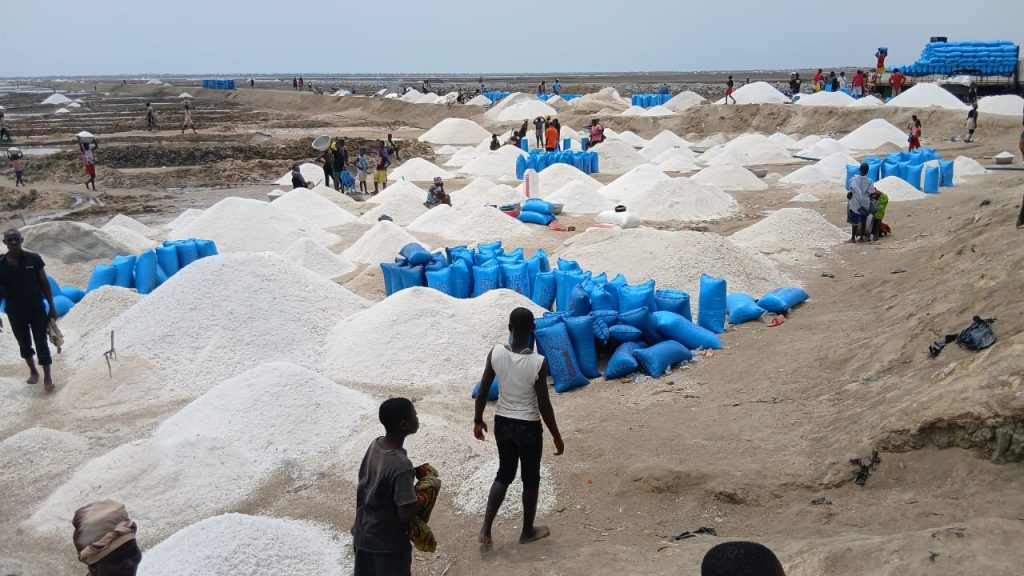
ACCRA, GHANA – Indigenous salt miners at the Songor Lagoon, one of sub-Saharan Africa’s premier salt-producing sites, are sounding the alarm over the dual threats of corporate monopolisation and climate instability. Covering over 41,000 acres, the lagoon is the lifeblood of Ada, yet local communities report that their traditional way of life is under siege.

Footage from the site reveals the gruelling reality of artisanal mining: workers scooping raw salt from wooden boats and carrying heavy buckets to be packed for transport. For the 70,000 people across 50 communities relying on this resource, the lagoon represents “everything.”

“The lagoon you are seeing here is our life,” explained Nene Mailo Dadebom Anim II, Chief of Toflokpo Village. “All that we do in Ada comes from this lagoon.”

While hundreds of thousands of tons could be produced each year, production remains relatively low at 250,000 tons. The dispute intensified in 2021 when the Ghanaian government leased the land to Electrochem under a 15-year contract. While officials assured that they would invest in the land and develop infrastructure, locals believed it was a way to restrict their access to their traditional mining grounds.

“About two or three years ago, we started having some problems,” said one of the local buyers. “They took away the areas we were mining. We cannot do it the way we were doing before.” Chief Anim II was also critical of the business model, saying there was no research into the nature of salt to enable large-scale, sustainable production.

In addition to economic factors, climate change introduces uncertainty about the future of Ghana’s “white gold.” Unexpected heavy rains often dissolve salt crystals, causing several days of work to be lost in a matter of minutes.

View the full video report below

[This current affairs report item is provided as part of Broadcast Media Africa (BMA)’s mandate to keep Africa’s broadcast media audiences and stakeholders informed on international developments in local and global humanitarian and public service broadcasting.]

Share Tweet Post Email
Tags: News & Reports
Share204Tweet128
Previous Post

BMA Feature: Thousands Gather as Lagos Fanti Carnival Celebrates “A Homecoming of Heritage”

Next Post

Kenya: New Licensing Regulations Transform Satellite Internet Landscape

Publisher
-
Benjamin Pius
Publisher
-
Benjamin Pius

 About us

Our goal is always to keep industry stakeholders abreast of opportunities in technology and service innovations that are and will shape Africa’s broadcasting and media industry via quality news, information, intelligence and insight .

 Contact us

+44 (0) 207 712 1526
info@broadcastingandmedia.com
BSP Communications Limited
Level 37, One Canada Square
Canary Wharf
London, E14 5AB, United Kingdom

No Result
View All Result
  • Home
  • News & Reports
  • Resources
  • Services
    • Promo: Spotlight Service
  • Events
  • Community
This website uses cookies. By continuing to use this website you are giving consent to cookies being used. Visit our Privacy Policy.