

• Latest
South Africa: Blue Label Telecoms Secures ICASA Approval For Cell C Licence Transfer

Nigeria: Telecom Sector Flourishes With US$75 Billion In Investment Post-Liberalisation

March 24, 2026
BMA Webinar: Exploring Content Production And Distribution In The Age Of AI – Success Factors

AI-Powered Audience Intelligence Set To Transform Broadcasting And Advertising Across Africa

June 17, 2026
Kenya’s Media Council Executive Advocates For Intelligent Archiving At East Africa 2026 Broadcasters’ Convention

Kenya’s Media Council Executive Advocates For Intelligent Archiving At East Africa 2026 Broadcasters’ Convention

June 17, 2026

Collaboration Identified As Critical To The Future Of Audiovisual Preservation

June 17, 2026

Stakeholders Unite For Nigeria’s Digital Broadcasting Transition

June 17, 2026
Esports World Cup Foundation Partners With IMG For Enhanced Global Broadcast And Coverage – Report

Ethiopia Enhances Media Collaboration With TV BRICS

June 17, 2026
Nigeria To Reach 55 Million Pay-TV Subscribers By 2029 – According To Industry Report

Zambia’s IBA DG: Regulatory Agility And Collaboration Key To Broadcasting’s Future

June 16, 2026
Accelerating Universal Delivery Of Fully-Digital Broadcasting Services To All Nigerians

Home-Grown Solutions Critical To Africa’s Broadcasting Future – According To MD of UBC Uganda

June 16, 2026
Strengthening Preservation: BMA Webinar To Address Risk Identification & Assessment In Audio-Visual Archives

NOA Archives CEO Warns Global Broadcasters: The Window To Save Audio-Visual Heritage Is Closing

June 16, 2026
Canal+ Gets Approval To Buy Pay-TV Group OCS and Orange Studio

Fox Acquires Roku In US$22 Billion Streaming Deal To Compete In TV Market

June 16, 2026
Eccho Rights Expands Horizons With Turkish Animated Content Acquisition

Eccho Rights Expands Horizons With Turkish Animated Content Acquisition

June 16, 2026

Featured: The Tech Stack That Defines The Next Decade Of Radio And Audio Broadcasting In Africa

June 15, 2026
“Stronger Support Required For Community Media”, Says MDDA CEO Ahead Of Audience and Advertising Summit In Johannesburg, South Africa

South Africa: DStv Sets New Streaming Record With FIFA World Cup Games

June 15, 2026
Wednesday, June 17, 2026
Broadcast Media Africa
  • Home
  • News & Reports
  • Resources
  • Services
    • Promo: Spotlight Service
  • Events
  • Community
No Result
View All Result
BMA
  • Home
  • News & Reports
  • Resources
  • Services
    • Promo: Spotlight Service
  • Events
  • Community
BMA
Join BMA Network
No Result
View All Result
Home Telecommunication

Nigeria: Telecom Sector Flourishes With US$75 Billion In Investment Post-Liberalisation

March 24, 2026
Reading Time: 3 mins read
A A

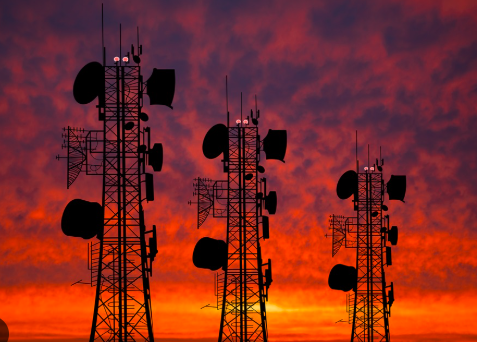
Over the past two decades, Nigeria’s telecommunications industry has attracted over US$75 billion in investment since its liberalisation in 2001, according to the Nigerian Communications Commission (NCC). This significant figure highlights the transformative effects of market reforms on the country’s burgeoning digital economy.

Transformative Reforms and Market Growth

The NCC unveiled this milestone as part of its Spectrum Roadmap for the Communications Sector (2026–2030), a strategic initiative designed to enhance spectrum allocation and foster future development. The foundation of this transformation was laid by the National Communications Policy of 2000, which opened the telecom market to private investors. The formal liberalisation began in January 2001 with the licensing of private telecom operators and the initiation of competitive spectrum auctions.

These early reforms spurred the rapid expansion of network infrastructure, leading to the widespread adoption of second- and third-generation services (2G and 3G) and drastically improving access, affordability, and connectivity nationwide.

Investment Trends and Market Maturity

According to the NCC, the initial spectrum auctions held in 2001 and 2007 demonstrated strong investor interest, reflecting optimism in a newly liberalised market. The later auctions in 2014 and 2016 indicated a shift towards a more mature market where operators began to adopt selective investment strategies, prioritising efficiency and capital optimisation over sheer speed of expansion.

A pivotal development occurred from 2021 to 2022 with the auction of the 3.5 GHz spectrum band, facilitating the launch of fifth-generation (5G) services in Nigeria. The NCC views this progress as a crucial step towards next-generation connectivity, setting new standards for future spectrum allocations.

Economic Impact and Significance

The US$75 billion influx includes both foreign direct investment and domestic capital, establishing telecommunications as a vital component of Nigeria’s non-oil economy. Data indicates that this sector has consistently contributed significantly to GDP, driven by growing demand for mobile data, broadband services, and digital offerings.

As one of Africa’s largest telecommunications markets, Nigeria continues to experience robust subscriber growth and increasing internet penetration, driving sustained capital investment and infrastructure development.

Future Directions and Policy Focus

The NCC’s Spectrum Roadmap outlines strategies for short-, medium-, and long-term initiatives to optimise spectrum use and bolster the digital economy. Key focus areas include:

– Enhancing regulatory frameworks to attract further investment – Supporting the rollout of 5G and emerging technologies

– Improving spectrum efficiency to meet escalating data demands

These priorities are designed to maintain the sector’s growth momentum while tackling infrastructure shortfalls and service quality issues.

In summary, Nigeria’s telecommunications landscape has transformed into a key investment hub, amassing over US$75 billion since its liberalisation in 2001. The ongoing infusion of capital underscores the positive impact of policy reforms and effective regulatory measures. Looking ahead, continued investment, efficient spectrum management, and supportive policies will be essential to unlocking the next stage of growth in Nigeria’s digital economy.

Share Tweet Post Email
Tags: ConnectivityNews & ReportsNigerian Communications Commission (NCC)Spectrum
Share207Tweet129
Previous Post

Menesia Muinjo Appointed New Director General Of The Namibian Broadcasting Corporation (NBC)

Next Post

Malawi: Regulator Set To Boost Content Creation With New Monetisation Initiative

Publisher
-
Benjamin Pius
Publisher
-
Benjamin Pius

 About us

Our goal is always to keep industry stakeholders abreast of opportunities in technology and service innovations that are and will shape Africa’s broadcasting and media industry via quality news, information, intelligence and insight .

 Contact us

+44 (0) 207 712 1526
info@broadcastingandmedia.com
BSP Communications Limited
Level 37, One Canada Square
Canary Wharf
London, E14 5AB, United Kingdom

No Result
View All Result
  • Home
  • News & Reports
  • Resources
  • Services
    • Promo: Spotlight Service
  • Events
  • Community
This website uses cookies. By continuing to use this website you are giving consent to cookies being used. Visit our Privacy Policy.