

Spectrum allocation has become one of the most consequential regulatory issues shaping the future of digital broadcasting in Africa. As transmission technologies evolve and cloud-based delivery models gain traction, the economic assumptions that historically underpinned broadcast spectrum policy are being fundamentally challenged.
At the core of this shift is the growing tension between spectrum scarcity, rising demand from multiple sectors, and the financial sustainability of broadcasting services operating under public service, universal access, and commercial mandates. Regulatory decisions on spectrum pricing, licensing duration, refarming, and reallocation now have a direct and measurable impact on the cost of digital transmission, investment capacity, and long-term service viability.
The topic “Spectrum Allocation and the Economics of Digital Transmission – Regulatory Imperatives” reflects the need to reassess how spectrum is governed in an environment where broadcasting, telecommunications, and cloud infrastructure are increasingly interdependent. Traditional, siloed regulatory approaches are proving insufficient as broadcasters adopt hybrid transmission architectures that combine terrestrial, satellite, IP, and cloud-enabled delivery.
Key policy considerations include the valuation of broadcast spectrum in digital markets, the treatment of broadcasting within national spectrum plans, and the implications of digital dividend policies on coverage, affordability, and media plurality. Equally important is whether existing regulatory frameworks adequately reflect the cost structures and economic realities of digital and cloud-based transmission, particularly in emerging and developing markets.
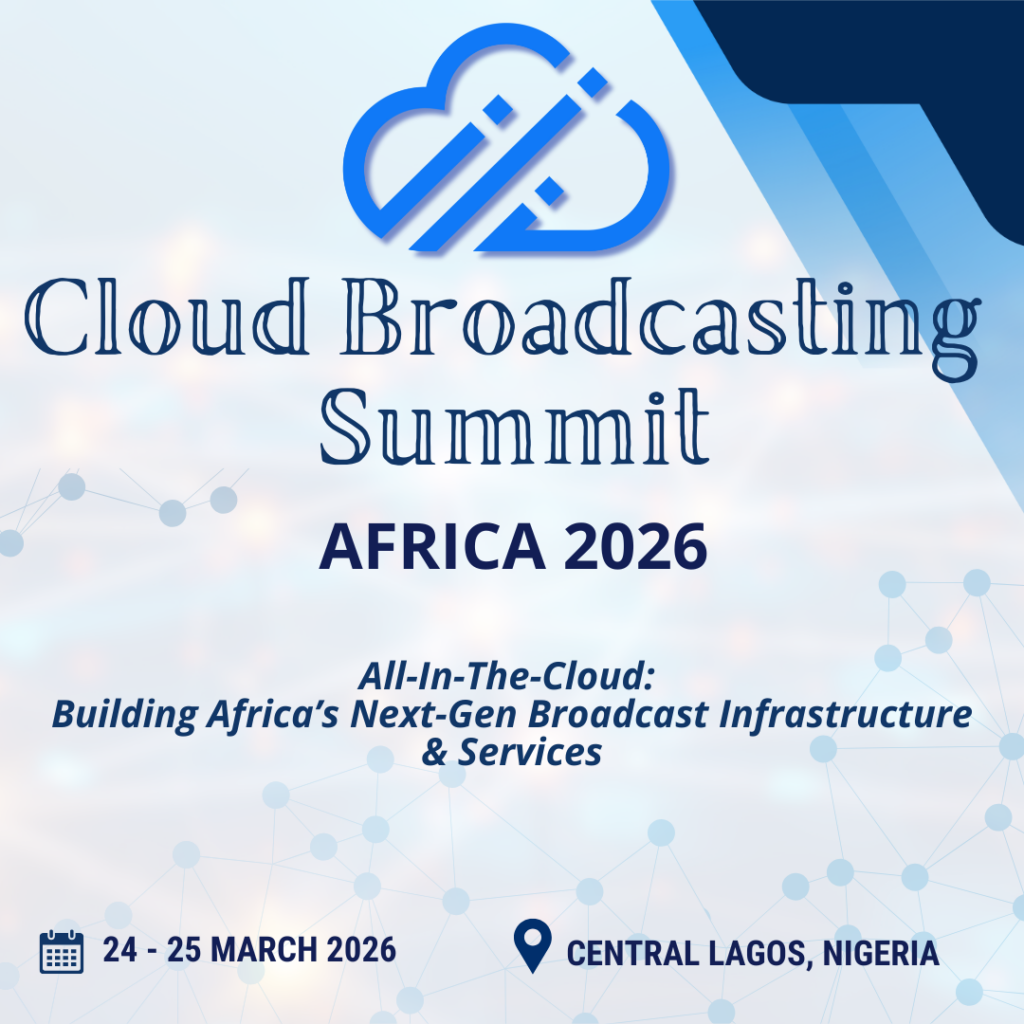
The Cloud Broadcasting Summit – Africa 2026, convened by Broadcast Media Africa and taking place on 24–25 March 2026 in Central Lagos, Nigeria, will provide a structured forum for examining these regulatory imperatives. Discussions will focus on aligning spectrum policy with evolving transmission models, ensuring regulatory certainty, and supporting economically sustainable broadcasting ecosystems in the digital era.
As African countries continue to refine their digital broadcasting strategies, the outcomes of these policy discussions are expected to inform future regulatory approaches to spectrum management, transmission economics, and cross-sector convergence.