






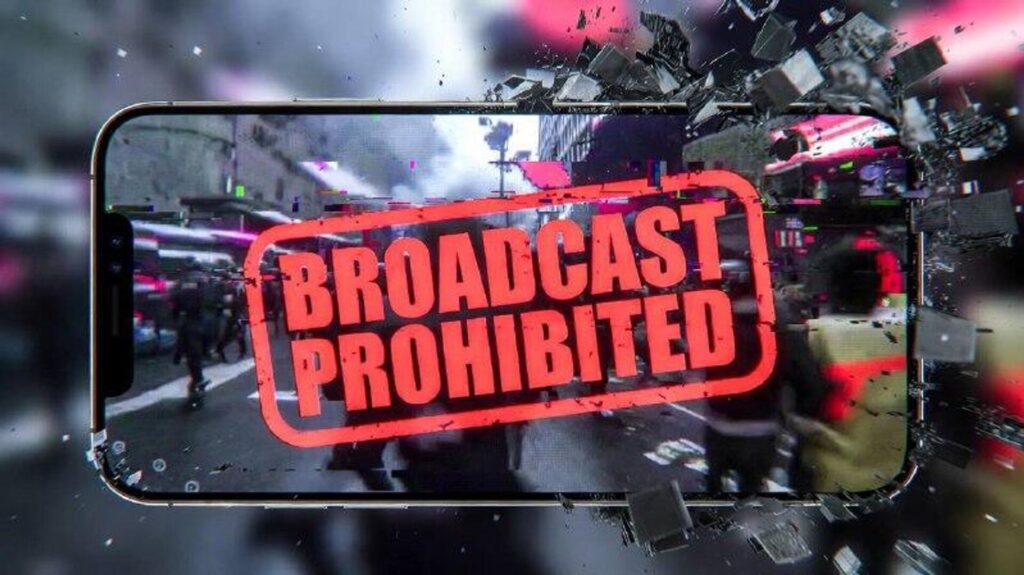
Recently, the Ugandan government announced a ban on the live broadcasting of “unlawful processions,” riots, and violent demonstrations as the country approaches its general elections.
The Ministry of Information, Communication, and Technology issued a statement declaring, “Live broadcasting or streaming of riots, unlawful processions, or violent incidents is prohibited, as it can escalate tensions and spread panic.”
In addition, the ministry has prohibited any publication of content deemed “inciting, hateful, or violent.”
President Yoweri Museveni’s administration, which has been in power for 40 years, frequently categorises anti-government protests as riots.
In the lead-up to the 2021 elections, the Ugandan authorities intensified their crackdown on supporters of Museveni’s major opposition, Bobi Wine, who is accused of claiming that the election was stolen—a charge that Wine refutes. This period of unrest led to over fifty fatalities, according to Reuters reports.
Amnesty International criticised the Ugandan security forces on Monday, claiming they initiated a “brutal campaign of repression” against Wine’s supporters, subjecting them to arbitrary detentions, assaults, and torture.
Kizza Besigye, another prominent opposition leader, remains in custody over treason charges more than a year after his arrest. He denies all allegations against him. His wife stated that he was kidnapped during a book launch in Kenya and forcibly brought back to Uganda, where he is held in a military detention facility in Kampala.
Yoweri Museveni has been leading Uganda since 1986, making him one of Africa’s longest-serving leaders as he seeks a seventh term in the upcoming January 2026 elections. His National Resistance Movement (NRM) has amended the constitution twice to eliminate presidential term and age limits, facilitating his continued rule.
Critics of Museveni assert that elections are marred by intimidation, the arrest of opposition supporters, alleged electoral malpractice, and constraints on media and civic freedoms—accusations his government denies, attributing them to security concerns.
Opposition figures, including Bobi Wine, maintain that previous election outcomes were manipulated and that state repression hinders fair political competition, raising significant doubts about Uganda’s democratic integrity.