

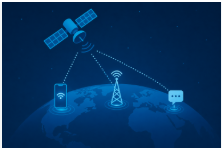
Direct-to-device (D2D) satellite connectivity is emerging as a new competitive frontier in Africa’s telecommunications market, with satellite operators and mobile network providers exploring ways to connect ordinary smartphones directly to satellites and extend coverage beyond terrestrial networks.
According to a report by the GSMA Intelligence Satellite and Non-Terrestrial Networks (NTN) tracker for the third quarter of 2026, only 13% of mobile operators in sub-Saharan Africa have satellite partnerships, compared with a global average of 19%. Despite the relatively low adoption, commercial deployments are beginning to take shape.
Tim Hatt, head of research and consulting at GSMA Intelligence, expects broad-based D2D coverage across much of the world, including Africa, towards the end of the decade, around 2028 or 2029 depending on the provider.
Airtel Africa has already entered the market, launching Starlink Mobile commercially in the Democratic Republic of the Congo in August 2026. Unlike conventional satellite broadband, which requires a dish and dedicated terminal, D2D services can connect compatible standard LTE smartphones directly to satellites in low Earth orbit.
However, early services remain more limited than conventional mobile broadband. Initial capabilities can include SMS and WhatsApp text messaging, while broader internet access will depend on the technology and capacity offered by individual providers.
Regulation will be a significant factor in determining how quickly D2D services expand. Operators must navigate national licensing requirements, spectrum rules and relationships with established telecommunications providers. In Senegal, the provisional suspension of Starlink’s fixed satellite internet licence following a challenge by Sonatel has highlighted tensions around authorisation and market oversight. Although that case concerns traditional satellite broadband rather than D2D specifically, it illustrates the regulatory questions that may also affect future satellite-mobile partnerships.
For African broadcasters, the technology could eventually provide more resilient connectivity for remote production teams, outside broadcasts and facilities operating beyond reliable terrestrial coverage. It may also support communications in rural areas and during disruptions to conventional networks, although the initial limitations of D2D services mean it should not be treated as a replacement for high-capacity connectivity.
The wider commercial question is how satellite operators and mobile networks will share the market. Partnerships could extend coverage for established operators, while regulators will need to balance connectivity goals with competition, licensing and national telecommunications policies.