



• Latest
Accelerating Universal Delivery Of Fully-Digital Broadcasting Services To All Nigerians

BMA Editorial: Stolen Signals – The Revenue Leak The Industry Can No Longer Afford

August 31, 2026
AREWA24 Launches ‘Uwa Da Da’ To Promote Maternal And Newborn Health, Reduce Infant Mortality Across Northern Nigeria

AREWA24 Launches ‘Uwa Da Da’ To Promote Maternal And Newborn Health, Reduce Infant Mortality Across Northern Nigeria

October 16, 2026
Sputnik In Strategic Partnership Play With Broadcasters In East Africa – Joins Industry Convention

SPUTNIK Joins Broadcasters Convention – Southern Africa 2026 As Industry Partner

October 16, 2026

Nigeria And Kenya Lead African Streaming Growth, But Monetisation Remains A Challenge – PcW Finds

October 16, 2026
“Stronger Support Required For Community Media”, Says MDDA CEO Ahead Of Audience and Advertising Summit In Johannesburg, South Africa

Canal+ Reportedly Prepares Streaming Service For South Africa Following Showmax Closure

October 16, 2026
Nigeria: MTN Unveils Move To Expand Fibre Network To 8 Million Homes By 2028

Kenya Allocates US$100 Million To Expand National And Cross-Border Fibre Network

October 16, 2026
SABC Expands Cross-Platform Strategy With Television Premiere Of Ask A Man

SABC Expands Cross-Platform Strategy With Television Premiere Of Ask A Man

October 16, 2026
BMA Feature: African Energy Week Addresses Middle East Volatility And Regional Investment Opportunities

BMA Feature: African Energy Week Addresses Middle East Volatility And Regional Investment Opportunities

October 16, 2026
BMA Feature: Zimbabwe’s Geo Pomona Facility Showcases Waste-To-Energy Transformation To African Union Delegates

BMA Feature: Zimbabwe’s Geo Pomona Facility Showcases Waste-To-Energy Transformation To African Union Delegates

October 16, 2026
BMA Feature: Global South Investment Drives Economic Transformation In South Africa’s Coega SEZ

BMA Feature: Global South Investment Drives Economic Transformation In South Africa’s Coega SEZ

October 16, 2026
BMA Feature: Nigerian Artist Abdulsalam Abdul Turns Discarded Paper Into Sculptural Portraits

BMA Feature: Nigerian Artist Abdulsalam Abdul Turns Discarded Paper Into Sculptural Portraits

October 16, 2026
Google Cloud Strengthens Cybersecurity In Africa With Digicloud Africa

BMA Industry Report: Experts Warn Of Critical Cybersecurity Risks Facing Africa’s Broadcasters

October 15, 2026
Netflix Secures Exclusive FIFA World Cup 2030 Rights In Spain And Andorra

Netflix Secures Exclusive FIFA World Cup 2030 Rights In Spain And Andorra

October 15, 2026
Saturday, October 17, 2026
Broadcast Media Africa
  • Home
  • News & Reports
  • Resources
  • Services
    • Promo: Spotlight Service
  • Events
  • Community
No Result
View All Result
BMA
  • Home
  • News & Reports
  • Resources
  • Services
    • Promo: Spotlight Service
  • Events
  • Community
BMA
Join BMA Network
No Result
View All Result
Home Spotlight

BMA Editorial: Stolen Signals – The Revenue Leak The Industry Can No Longer Afford

August 31, 2026
Reading Time: 3 mins read
A A

Piracy is not a nuisance at the edge of the business. It is a leak running through the middle of it, draining the value of everything else our industry is building.

Walk through any major market on this continent, and you can buy the entire premium television universe for the price of a decent lunch. A loaded box, a subscription to an illicit IPTV service, a link to a restreamed match: the pirate offer is cheap, convenient and everywhere. 

Meanwhile, the broadcasters and platforms that actually paid for that content are asked to build sustainable businesses on whatever revenue survives the leak. Let us be honest about what this is. Not a victimless shortcut, not a fringe problem for the lawyers, but a straightforward theft of the industry’s future.

Piracy does more than take money out of broadcasters’ pockets. It affects audience measurement, advertising, subscriptions, rights and even the long-term value of content libraries. Viewers watching illegal streams are often missing from official audience figures, making legitimate audiences appear smaller than they really are. Exclusive rights also become less valuable when the same content is circulating freely elsewhere. And when content cannot be properly protected, its value as an archive or future licensing asset is put at risk. Piracy, therefore, is not an isolated problem. It runs through almost every part of the media business.

Piracy is no longer what it used to be. The familiar image of copied discs being sold at a roadside stall has given way to sophisticated illegal streaming businesses. These operations can offer subscription packages, customer support and payment systems, while live sports and other premium content are redistributed across social platforms and borders. The scale and organisation of these networks make one thing clear: piracy has become a serious commercial threat, not just a minor infringement.

The fight against piracy is winnable. But the industry will win it by acting together, not by any single broadcaster acting alone.

The encouraging news is that the tools have caught up. Forensic watermarking can now trace a pirated stream back to its source in near real time, allowing live feeds to be cut mid-match. AI-driven monitoring scans platforms around the clock and files takedowns at a speed no legal team could match. Modern conditional access and digital rights management have made the signal itself far harder to steal. And cooperation is improving among broadcasters, rights

holders, platforms, payment providers and regulators, because piracy operations cross borders and the response has to as well.

But an honest editorial has to say the harder thing too. Enforcement alone has never beaten piracy anywhere in the world. People reach for the pirate offer when the legal one is priced out of reach or simply unavailable. The most effective anti-piracy tool ever invented is a legitimate service people can actually afford, which is why the flexible pricing we advocated some weeks ago, such as daily passes, mobile-money billing, and the ad-supported tiers, belongs in the anti-piracy conversation just as much as the watermarking does. 

Squeeze the illegal supply and grow the legal alternative. It takes both.

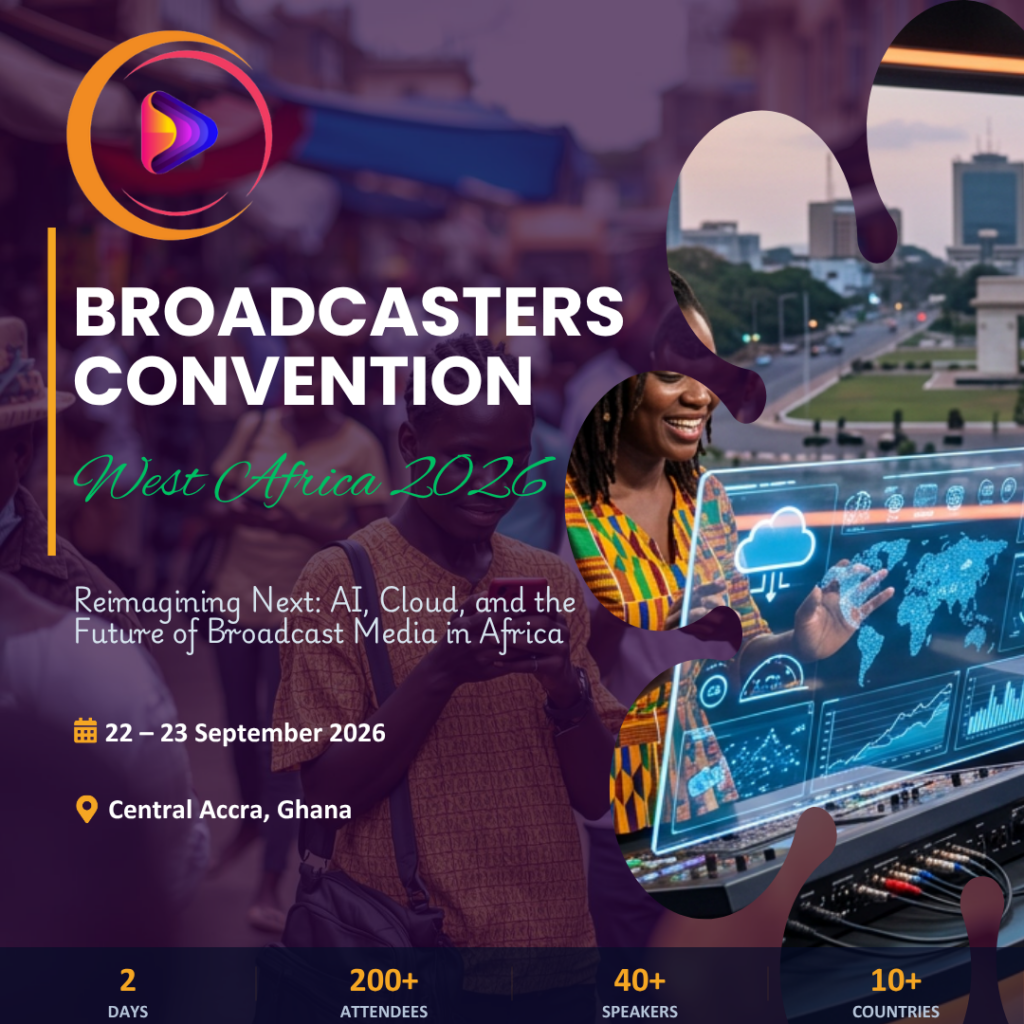
How to do both, practically and together, is firmly on the agenda at the Broadcasters Convention – West Africa 2026 in Accra this September, where broadcasters, rights holders, regulators and anti-piracy technology specialists will get into the details of what a coordinated regional response should look like.

This article is written by Benjamin Pius (CEO & Publisher, BMA) and forms part of an upcoming Broadcasters Convention – West Africa 2026, 22–23 September 2026, Labadi Beach Hotel, Accra, Ghana. 

To learn more, visit: wab-africa.broadcastingandmedia.net

Share Tweet Post Email
Tags: Audience MeasurementBroadcast Media AfricaIPTV Service
Share205Tweet128
Previous Post

DStv Sharpens Anti-Piracy Fight As Illegal Streaming Networks Grow

Next Post

eMedia Expands Openview Offering With New eXplore Channel

Publisher
-
Benjamin Pius
Publisher
-
Benjamin Pius

 About us

Our goal is always to keep industry stakeholders abreast of opportunities in technology and service innovations that are and will shape Africa’s broadcasting and media industry via quality news, information, intelligence and insight .

 Contact us

+44 (0) 207 712 1526
info@broadcastingandmedia.com
BSP Communications Limited
Level 37, One Canada Square
Canary Wharf
London, E14 5AB, United Kingdom

No Result
View All Result
  • Home
  • News & Reports
  • Resources
  • Services
    • Promo: Spotlight Service
  • Events
  • Community
This website uses cookies. By continuing to use this website you are giving consent to cookies being used. Visit our Privacy Policy.