







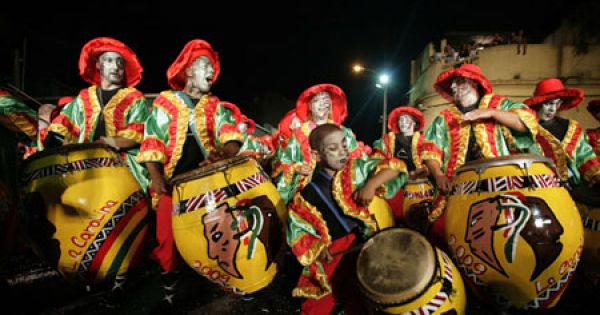
MONTEVIDEO, URUGUAY – In a secluded area of Montevideo, an activist, cultural producer, and candombe teacher, Angela Ramírez, is using textile art, dance, and reminiscences to preserve the identity of Afro-Uruguayans through her cultural centre, Templo Wax.
Founded in 2016, Templo Wax can be described as both a fashion workshop and a cultural intersection point. Through garments sewn from African textiles, the endeavour serves as a physical manifestation of the history and archive of the Afro-Uruguayan people, alongside literary works that highlight their heritage.
“Templo Wax is an identity space where many things transcend,” says Ramírez. “It is about the aesthetics of African identity, bringing us closer to the contemporary African culture, music, dances, and way of life.”
Clothing plays an integral role in Ramírez’s identity. What used to be a simple, large piece of cotton cloth worn around the body is now a tailored garment that incorporates local traditions and African aesthetics. Aside from clothing, candombe is one of the most essential dances of Afro-Uruguayan culture in Montevideo, as noted by Ramírez.
Inspired by her own genealogical quest, Ramírez notes that many Uruguayans are increasingly interested in researching their origins to acknowledge their Black heritage, which lies at the foundation of the country’s music and movements.
“The root is always Black. When we work on the history of dance and music, we end up talking about Africa; we end up talking about our roots.” Through clothing, literature, and rhythms, Templo Wax continues to preserve the Afro-Uruguayan heritage for future generations.
View the full video report below
[This current affairs report item is provided as part of Broadcast Media Africa (BMA)’s mandate to keep Africa’s broadcast media audiences and stakeholders informed on international developments in local and global humanitarian and public service broadcasting.]