






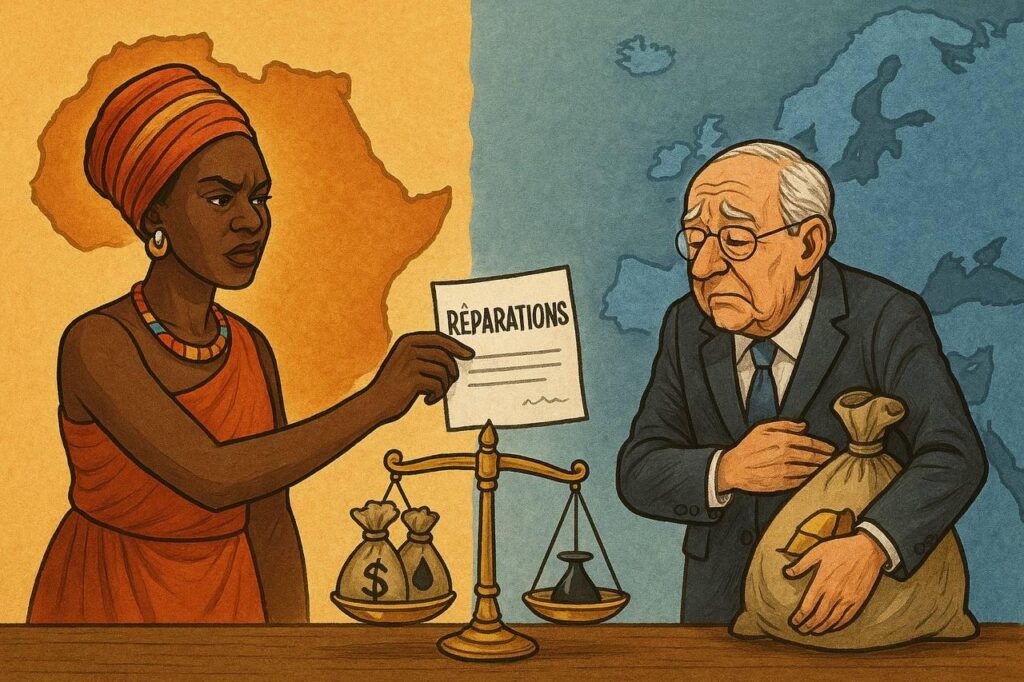
ACCRA, GHANA – As Ghana prepares for a global reparations conference, prominent leaders and members of the African diaspora community have stepped up their calls for total reparative justice in response to the continuing trauma caused by the transatlantic slave trade.
Scheduled for June 17-19 in Accra, the conference is being organised by President John Dramani Mahama. It is following on from a landmark UN vote declaring the transatlantic slave trade ‘the gravest crime against humanity’. Although 123 nations supported the motion, the vote has divided the international community, as countries including the UK, the US and most EU nations voted against or abstained due to concerns about the implications for compensation.
Reparative justice activists argue that the call for reparations globally has always failed to recognise African people. “Every other group who suffered in America has received some form of reparations apart from the African Americans,” said Chauncia Willis-Johnson, co-founder of Ghana Climate Centre of Excellence. Maurice Johnson, also co-founder, added: “The Germans were obliged to compensate the Jews… We will not rest till we receive our reparations.”
Unlike monetary compensation, activists seek to promote structural healing and community rebuilding. Tamica Atubga, the founder of the HOPE Approach, remarked that while monetary assistance is essential, sustainable development is equally important, especially in West Africa.
After centuries in which an estimated 12 to 15 million people were shipped from their native lands, the African Diaspora today seeks a simplified process for gaining citizenship in their adopted lands.
View the full video report below
[This current affairs report item is provided as part of Broadcast Media Africa (BMA)’s mandate to keep Africa’s broadcast media audiences and stakeholders informed on international developments in local and global humanitarian and public service broadcasting.]