







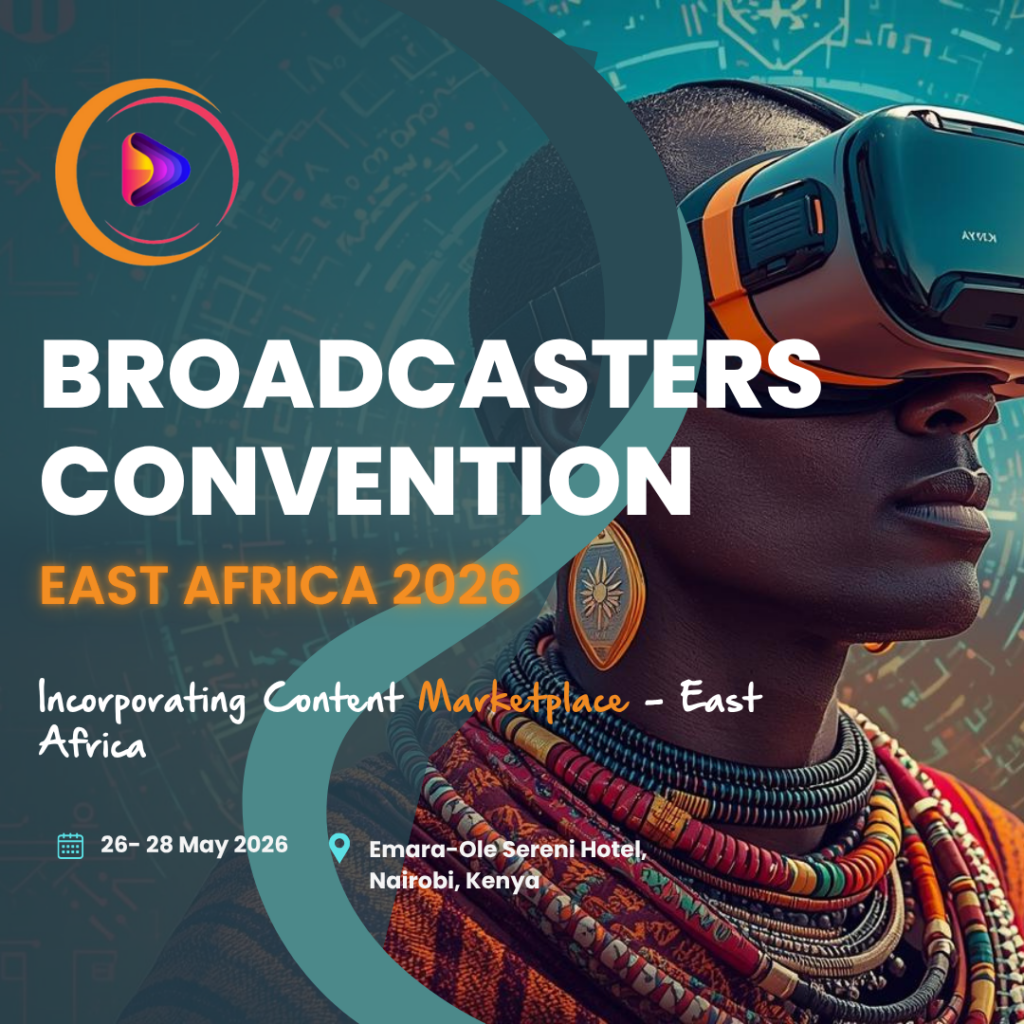
This article is written by Benjamin Pius (Publisher @ BMA) as part of the forthcoming Broadcasters Convention – East Africa, 26–28 May 2026, Nairobi, Kenya. Register and view the full programme →
On 30 April 2026, Showmax went dark. Eleven years after its launch as Africa’s first homegrown subscription streaming service, the platform shut down — not from a lack of ambition, but from an excess of it. Over three years, Showmax lost more than US$500 million. Revenue fell, subscribers churned, and the losses grew worse every year. Canal+ CEO Maxime Saada called it an “expensive failure”. The board agreed. The app closed.
Showmax’s collapse is not simply a corporate post-mortem. It is a lesson written in half a billion dollars about what happens when a Western subscription model — built on the assumption that consumers will pay a fixed monthly fee regardless of economic conditions — is applied without adaptation to one of the world’s most price-sensitive and economically diverse markets.
Africa’s digital platforms are at an inflexion point. The old revenue playbook is breaking down. A new one is being written — and the broadcasters and platforms paying close attention right now are the ones who will define the next decade.
THE SUBSCRIPTION TRAP
The symptoms are visible across the continent. Netflix raised prices in both South Africa and Nigeria in 2025, squeezing a subscriber base already under pressure from currency volatility and rising data costs — the Nigerian Communications Commission approved a 50% increase in telecom tariffs in early 2025 alone. MultiChoice reported its total customer base falling from 14.9 million to 14.4 million in the same period. Meanwhile, the gap between registered and paying subscribers tells its own story: of DStv’s 1.24 million registered Kenyan customers, fewer than one in five were active paying subscribers.
The problem is structural, not cyclical. In Africa, connectivity itself consumes a disproportionate share of household income — 81% of digital spend in Nigeria goes on getting online before a single Kobo reaches content. When the cost of access is already this high, a premium subscription on top is a barrier that most audiences will not cross. Platforms that built their entire monetisation strategy on SVOD — subscription video on demand — are discovering that the model was never designed for these markets.
THE AVOD MOMENT
The alternative gaining real traction is AVOD (advertising-supported video on demand), where content is free to watch and funded entirely by advertisers. The most compelling proof of concept in Africa right now is SABC+. Launched with a free, registration-only AVOD model in 2022 and relaunched with a fully rebuilt platform in July 2024, SABC+ reached 2 million registered users by February 2026, with 1.5 million actively watching every month. Nearly 200 million videos have been watched on the platform, generating 87 million hours of viewing time. The platform is now planning gamification features — rewarding users with data bundles and devices for discovering new content — a move that, if executed well, could significantly deepen engagement.
SABC+ is not alone. France’s TF1+ launched across 22 Francophone African countries in June 2025 on a free, ad-supported basis. In Nigeria, a new generation of local platforms — Circuits, Kava, EbonyLife ON Plus — are experimenting with pricing models built around local purchasing power rather than global benchmarks. In Gabon, La Gabonaise launched in June 2025 as the country’s first 100% locally tailored streaming service. The FAST model — Free Ad-Supported Television, essentially scheduled programming delivered via the internet — was identified at the OTT Content Streaming Summit Africa in February 2026 as “the most viable path” for the price-sensitive African market.
“Africa does not lack audiences, nor mobile penetration, nor content. What we must no longer lack is agency.” — Stanley Benjamin Similo, President, Southern African Broadcasters Association (SABA), OTT Summit Africa 2026
THE ADVERTISING OPPORTUNITY
For this shift to work, the advertising market must follow suit. And the data suggests it is doing exactly that. PwC projects Kenya’s internet advertising market to grow at a 16% CAGR—the fastest rate globally.
Nigeria is forecast to reach 84% digital ad spend by 2029, surpassing the global benchmark of 80%.
Across the region, mobile-first programmatic advertising, performance-based campaigns, and influencer-led content are replacing traditional broadcast spot advertising as the primary tools of brand engagement.
That is a significant opportunity for platforms willing to build the advertising infrastructure to capture it — sophisticated targeting, transparent measurement, mobile-native formats, and sales teams that can translate audience data into advertiser confidence.
The platforms that build this capability now will not just survive the SVOD shakeout. They will inherit the audiences that premium subscription services are losing.
THE NEW PLAYBOOK
Showmax’s story does not mean subscription models have no future in Africa. Hybrid approaches — free AVOD tiers paired with optional premium SVOD — are already showing promise in emerging markets globally, and Africa’s expanding middle class will continue to grow. Canal+ has signalled its intent to introduce its own streaming app as the successor to Showmax, carrying MultiChoice’s content forward. The appetite for quality content has not gone anywhere.
But the lesson of the last five years is clear: a model designed for high-income, low-connectivity markets cannot simply be transplanted to Africa and expected to perform.
The platforms that will define digital broadcasting across this continent are those built around African realities — mobile-first, ad-supported where necessary, locally priced, and relentlessly focused on content that people actually want to watch. That is not a compromise. That is the strategy.
This article is written by Benjamin Pius (Publisher @ BMA) as part of the forthcoming Broadcasters Convention – East Africa, 26–28 May 2026, Nairobi, Kenya. Register and view the full programme →