






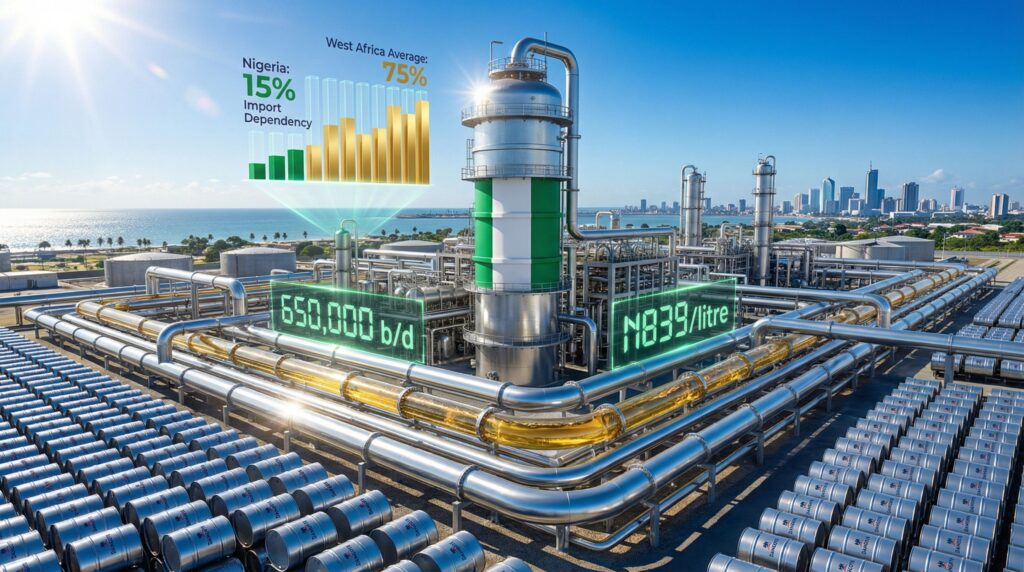
ABUJA, Nigeria – The dream of achieving energy independence is turning into a nightmare amid tough economic challenges Nigerian small business owners are facing following the Dangote Petroleum Refinery’s achievement of its production goals, which are set to generate 650,000 barrels a day.
The mission of the revolution was to ensure that Nigeria would be free from external dependence on fuel. Yet, fuel prices across the country increased by 65% due to market uncertainty and geopolitical conflicts over the Strait of Hormuz, through which roughly one-fifth of the world’s oil trade passes.
As the price of crude oil rises internationally to over $100 per barrel, problems arise for local economies. In Nigeria, for instance, most entrepreneurs find it very hard to justify the existence of natural oil deposits against the rising costs of fuel.
Based on Jato Richard’s personal account as a sawmill company operator, there are plenty of natural resources within the nation’s borders; however, the country is experiencing price pressure due to external wars. The repercussions of this can be seen in crucial services, where, according to Jimba Moses, an operations manager at a water production plant, the cost of producing 3,500 bags of water was formerly pegged at $11.01 but is now estimated at $25.69 to $36.69.
Consequently, he has been forced to raise prices, making them unaffordable for citizens. Small businesses are also struggling to cope with the situation, with some even losing clients and reducing production capacity.
As part of efforts to counter the negative effects of the current issue, the government of Nigeria has promised to implement market and other reforms for the welfare of small-scale entrepreneurs.
View the full video report below;
[This current affairs report item is provided as part of Broadcast Media Africa (BMA)’s mandate to keep Africa’s broadcast media audiences and stakeholders informed on international developments in local and global humanitarian and public service broadcasting.]