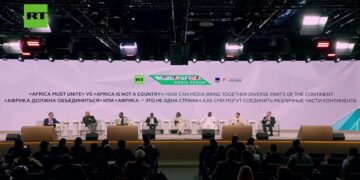






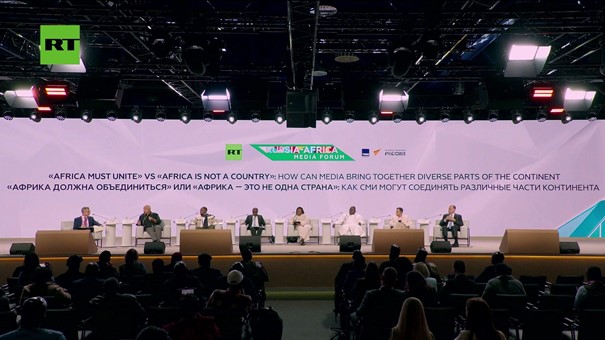
The banner above the stage framed the debate as a contest: “Africa must unite” versus “Africa is not a country”.
The question put to the panel on the forum’s opening day, 26 October, was more practical. “Africa is so diverse, up to 1,500 different languages,” the moderator said. “How can you work to leverage shared themes?”
The panellists came from Rwanda, Namibia, Kenya, Tanzania, Egypt, Mali, Seychelles and Algeria, and their answers were as varied as the map. Peter Denk, Head of News at the Namibia Broadcasting Corporation, began with a 2024 study by Africa No Filter and the University of Cape Town on how international media cover the continent. He noted one of its findings: “There was also no reflection on the ordinary person in the street.”
For Denk, the panel itself showed that diversity is a strength rather than a problem. “Just from our panel here, it’s so diverse from North Africa up to Southern Africa,” he said. “That diversity is so rich, and we should be able to harness and harvest that.”
A Kenyan panellist argued that unity has to be built from the ground up. “For us, we just don’t start with unity, we start with local stories,” she said. “Unity is what happens when you tell enough local stories well enough so that people start recognising themselves in it.” A Tanzanian panellist reached for Julius Nyerere: “If it’s an African challenge, it has to do with you. If it’s an African opportunity, it’s the same thing.” He was also frank that language remains one of the biggest obstacles.
Emmanuel Munyarukumbuzi of the Rwanda Broadcasting Agency (RBA) turned to his hosts’ own channel for an example. “I’ll give an example of RT, which I have watched in English and French,” he said, “but I realised that … depending on the audience, depending on the language, there’s a way you adapt the same story because people come from different perspectives.” Different languages, in other words, need not mean different stories. “As Africa, we usually have the same concerns,” he said. “We usually have the same aspirations.”
A friend, or a convenor?
The bluntest answer came from the Algerian panellist. “We are not a single country. We are very different. We are very diverse. But we need to unite our efforts,” the panellist said, before turning to history and to the hosts. “There are colonisers. They did their best to make us dependent countries. But Russia is our true friend, willing to help us.”
That view is not confined to the panel. Prof Amin Alhassan, Director General of the Ghana Broadcasting Corporation, has explained GBC’s cooperation with Russian media in similar terms: “In Ghana we are overly dependent on Western assessments of international affairs.” As a group, though, the panellists set conditions. According to Malawi Voice, they would welcome partnerships with international media organisations, provided these were “mutually beneficial and based on equality”.
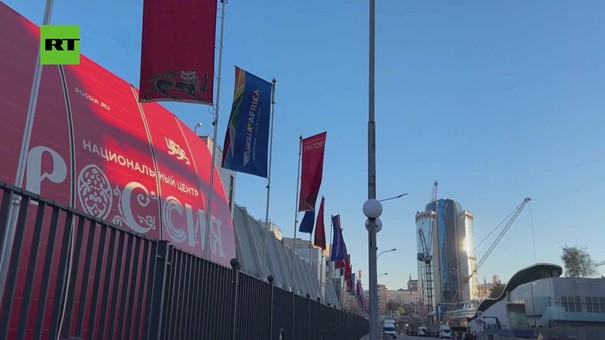
Flags outside the National Centre RUSSIA in Moscow during the Russia-Africa events. Still: RT footage
The panel ended without deciding whether Africa should be one story or many. On one point, though, the speakers agreed: the continent’s newsrooms will have to tell it themselves.
Watch Video: Africa is not a country
Tomorrow, Part 3: The newsroom view. Peter Denk of NBC Namibia on what cooperation means at the news desk.

