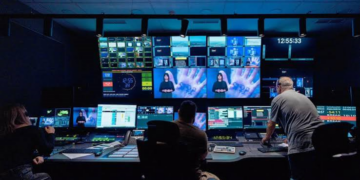







African broadcast industry professionals have called for a more strategic approach to managing broadcast facilities and technical infrastructure, emphasising the need to balance technological modernisation with operational efficiency, cybersecurity, cost management and investment in skilled personnel.
The call emerged from a Broadcast Media Africa (BMA) webinar held on Tuesday, 3 November 2026, under the theme “Monitoring, Automation & Intelligent Systems Management”, as part of its Broadcast Media Facilities and Systems Management webinar series.
The discussion brought together broadcast technology and media executives from Nigeria, Uganda and Zambia to examine how broadcasters can manage increasingly complex technical environments while navigating the transition from traditional broadcasting infrastructure to IP-based, cloud-enabled and software-driven operations.
Moderated by Yowela Chomba, General Manager of Powerhouse Media Group in Zambia, the discussion featured Donald Saola, Chief Technology Officer at New Central Media/New Central Television, Nigeria; Obaniyi Akinwale of Continental Broadcasting Services, Nigeria; Chomba Timoce Omar of Radio Minds Africa, Uganda; and Jaime Biaruhanga, General Manager of Signet Signal Network Limited, Uganda.
A central theme emerging from the discussion was the importance of modernising broadcast infrastructure without unnecessarily discarding existing systems.
Panellists highlighted that many African broadcasters face financial and operational constraints that make complete infrastructure replacement difficult. Rather than pursuing expensive, large-scale upgrades, they advocated a phased approach that integrates legacy infrastructure with newer technologies, allowing broadcasters to improve capabilities while protecting existing investments.
Jaime Biaruhanga emphasised that modernisation should take place in layers, with new systems specified around open standards and tested alongside existing infrastructure before full deployment.
He noted that legacy equipment can continue to serve as a valuable redundancy solution, provided it remains supported, documented, secure and economically viable to operate.
Donald Saola similarly advocated for hybrid infrastructure models, explaining that integrating existing SDI systems with IP-based workflows can provide broadcasters with greater flexibility, resilience and cost control.
The webinar also examined how automation and integrated systems can help broadcasters streamline operations, reduce recurring expenditure and improve service reliability.
Saola highlighted the growing role of software integration across media asset management, playout and graphics systems, enabling broadcasters to simplify workflows and optimise staffing requirements without compromising output quality.
He also discussed the use of IP-based signal contribution and multiple internet service providers to reduce dependence on traditional satellite transmission arrangements and maintain connectivity during network disruptions.
Biaruhanga shared practical examples from Uganda, including the integration of transmission infrastructure and direct-to-home satellite services to reduce operational costs. He also highlighted automated payment, service suspension and reconnection processes as ways of improving the management of third-party carriage arrangements.
The discussion underscored that automation should be introduced with a clear understanding of its operational benefits, implementation costs and associated security requirements.
Despite the opportunities presented by digital transformation, panellists cautioned that African broadcasters continue to face significant infrastructure challenges.
Power reliability and the cost of electricity, diesel generation and backup systems were identified as major operational concerns, particularly for broadcasters operating large transmission facilities and round-the-clock production environments.
Akinwale highlighted the substantial costs associated with maintaining reliable power infrastructure, cloud storage, internet connectivity, software licensing and technical support. He noted that reliance on international technology vendors and foreign-currency-based services places additional financial pressure on African media organisations.
Cybersecurity was another major area of concern, with panellists warning that the growing convergence of broadcast engineering, IT networks and cloud-based systems creates additional vulnerabilities.
The discussion stressed the importance of technical audits, secure access management, system redundancy and continuous investment in cybersecurity capabilities.
Akinwale also called for broadcasters to explore localised technology solutions, infrastructure sharing and collaboration to improve affordability and operational sustainability.
Beyond infrastructure and technology, the webinar placed considerable emphasis on the importance of developing and retaining technical talent.
Chomba Timoce Omar argued that broadcasters must invest in their people through continuous training, mentorship and knowledge-sharing, rather than allowing critical technical knowledge and system access to remain concentrated in the hands of a few individuals.
He cautioned that excessive dependence on individual engineers creates operational vulnerabilities, particularly when key personnel are unavailable.
Biaruhanga reinforced the need for a new generation of multidisciplinary broadcast engineers who combine radio frequency and video expertise with networking, IP systems, cybersecurity and commercial understanding.
He also encouraged broadcasters to incorporate vendor training into equipment procurement agreements and establish stronger standard operating procedures, onboarding processes and career development pathways.
According to Biaruhanga, technical professionals must increasingly understand business cases, lifecycle costs and risk reporting to demonstrate the value of infrastructure investments to boards and management.
In his concluding remarks, Saola argued that Africa’s broadcast transformation requires more than technological investment; it requires a fundamental shift in how broadcasters approach digital opportunities and revenue generation.
He encouraged broadcasters to move beyond viewing short-form content and emerging digital platforms as competitive threats, and instead explore how these platforms can become additional channels for audience engagement and commercial growth.
He stressed that technological strategies must be aligned with business objectives, enabling broadcasters to generate the revenue needed to sustain modernisation programmes.
Biaruhanga summarised the discussion with a call for greater discipline in managing broadcast infrastructure, noting:
“The most advanced facility in the world is only as reliable as the discipline behind it.”
He encouraged broadcasters to maintain accurate infrastructure inventories, measure operating costs, modernise systems incrementally, test recovery arrangements and invest in professionals who understand both broadcast signals and network technologies.
Click HERE to view highlights from the webinar.