





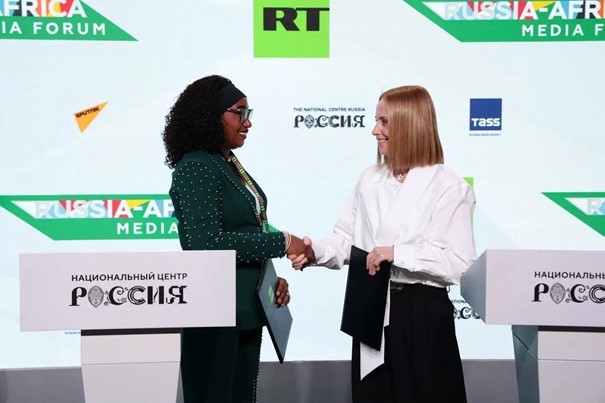
The speeches at the Russia-Africa Media Forum were about narrative. The paperwork was about partnership. By the time the forum closed on 29 October, RT said it had signed agreements with a dozen African media organisations and ministries, turning the panels at the National Centre RUSSIA in Moscow into a set of signed commitments.
Several of the continent’s best-known broadcasters were among them. RT lists agreements with the state broadcasting corporations of Ghana, Tanzania, Namibia and Zimbabwe, with Ethiopia’s Fana Media Corporation and the Ethiopian News Agency, and with Nigeria’s TVC News.
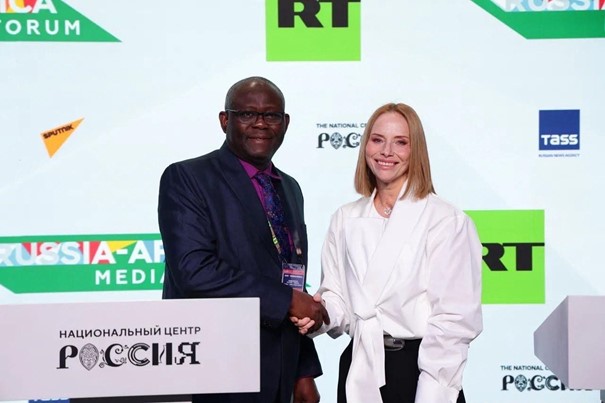
Behind those names stand Prof Amin Alhassan, Director General of the Ghana Broadcasting Corporation; Aisha Dachi, Director General of the Tanzania Broadcasting Corporation; Dawit Mesfin, Deputy CEO of Fana Media Corporation; Peter Denk, Head of News at the Namibia Broadcasting Corporation; Sugar Chagonda, CEO of the Zimbabwe Broadcasting Corporation; and Victoria Ajayi, CEO of TVC Communications. RT’s list also includes a memorandum with the Central African Republic’s communications ministry, while RT Arabic signed with partners in Libya, Sudan and Mauritania.
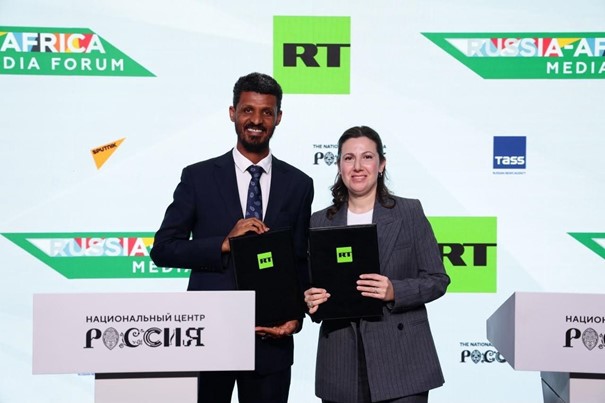
TVC has set out the most detail. Its memorandum of cooperation and mutual assistance in television broadcasting, signed by Ajayi and RT First Deputy Editor-in-Chief Elizaveta Brodskaya, covers content exchange, professional training and joint coverage of major international events. Ajayi framed Africa’s media problem in three phrases, “story ownership”, “story distribution” and “story power”, and proposed an African-owned platform through which broadcasters could share programmes with each other and with the world.
What they said
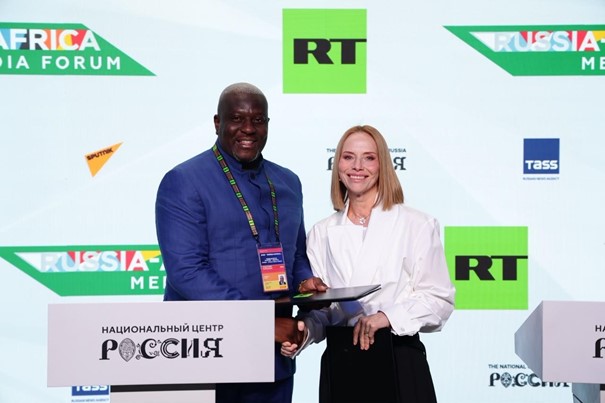
For ZBC’s CEO Sugar Chagonda, the case was capacity and ambition. “Media, as it plays its role, it is not just a spectator in terms of national development, but it is also a critical agent for development,” he told RT, adding that “we certainly salute that effort being invested by Russia”.
Signing was the easy part. Now comes the test for every broadcaster that put pen to paper. Content exchange can widen a newsroom’s view of the world, or quietly narrow it. Training can build independent capacity, or dependence. Which way these agreements break will depend on terms most audiences will never read, and on whether African editors keep the final say over what goes to air.
Watch Video: Africa’s broadcasters sign up
Tomorrow, “Africa is not a country”, the panel will ask how the media can bring together the continent’s diverse parts.