







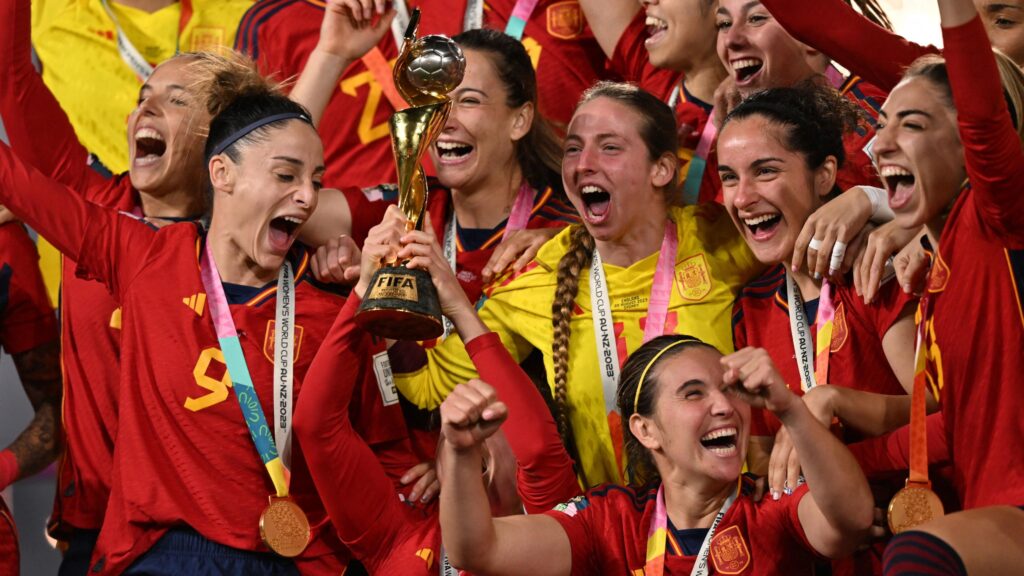
Netflix has appointed IMG as its production partner for the FIFA Women’s World Cup in Brazil in 2027, highlighting a shift in how major international sporting events can be produced and delivered for global streaming audiences.
The agreement, reported separately by Sportcal and SVG Europe on 6 October, is significant beyond the tournament itself. Netflix holds the rights and has chosen to procure host production from a specialist sports agency rather than rely on a conventional host broadcaster model.
The approach places the streaming platform directly at the centre of the production and distribution chain, with IMG responsible for delivering the production required for a global audience under a single commercial arrangement.
The model provides an interesting reference point for African broadcasters and sports rights holders as major tournaments increasingly move across traditional broadcast and streaming platforms.
One of the key developments to watch is the Confederation of African Football’s (CAF) approach to host production for the 2027 Africa Cup of Nations (AFCON), which will be staged across Kenya, Tanzania and Uganda as the Pamoja tournament.
CAF opened its tender for host broadcast services for AFCON 2027 earlier this year, but an award has yet to be publicly announced. A separate eight-year commercial agency tender covering the 2028, 2032 and 2036 AFCON tournaments also remains unresolved.
The eventual host broadcast appointment for AFCON 2027 will have implications well beyond the tournament itself. It will help determine how one of Africa’s largest television productions is structured, including the relationship between the rights holder, production partner, broadcasters, facilities companies and local suppliers.
For East African production houses, broadcast facilities providers and outside broadcast operators, an important question is whether host production will be structured around an agency-led model with its own international supply chain, or through a broadcaster-led operation that relies more heavily on local subcontractors.
The distinction matters because the two approaches can distribute production contracts, technical services, equipment requirements and employment opportunities very differently across the local broadcast ecosystem.
The Netflix-IMG arrangement therefore provides a useful international reference point as CAF prepares to determine the production framework for AFCON 2027. While neither Sportcal nor SVG Europe reported a value or contract term for the Netflix-IMG arrangement, the deal illustrates how streaming platforms can increasingly shape not only where major sporting events are viewed, but also how their host productions are commissioned and delivered.