





There is a conversation that African radio needs to have with itself, not about podcasting, not about AI, and not about whether Gen Z still listens.
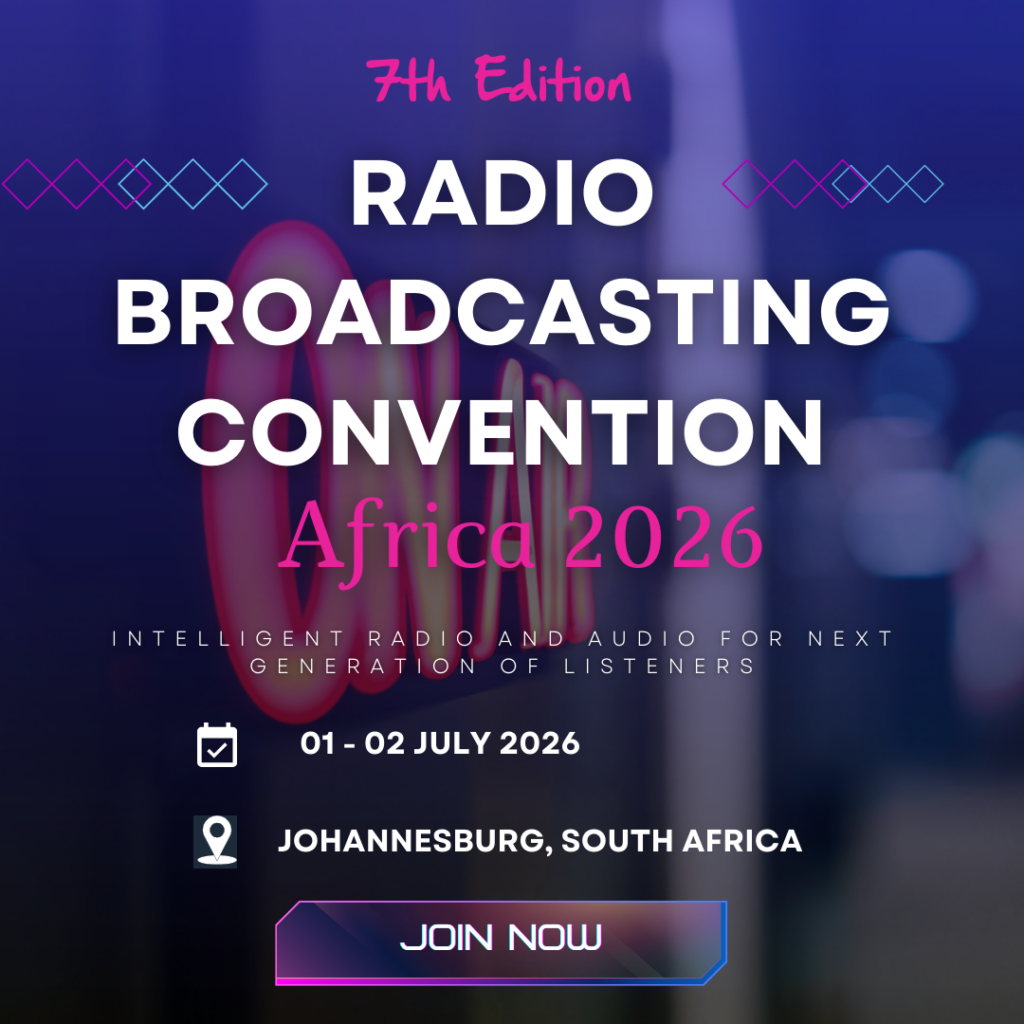
Those conversations matter — and they will all happen at the Venue Green Park in Johannesburg this week.
But underneath all of them sits a more uncomfortable question, the one that the Radio Broadcasting Convention – Africa 2026 is, by design, forcing into the open: has the industry been telling the truth about what it actually knows about its audience?
The answer, when you read the full two-day agenda carefully, is: not entirely.
And everything else — the revenue anxiety, the talent pipeline problem, the licensing complexity, the platform competition — flows from that single admission.
THE MEASUREMENT PROBLEM
Day One opens with a panel that, on the surface, sounds technical. In practice, it is existential.
Measuring the Modern Listener – Moving Beyond Traditional Radio Ratings to Actionable Audience Intelligence
African radio has, for decades, sold advertising based on reach estimates derived from survey methodologies built for a pre-digital, pre-mobile, pre-streaming world. They measured who had a radio set and when they turned it on. They did not — because they could not — measure what listeners felt, what kept them listening, what made them switch, or what they did after hearing an ad. Advertisers bought it because there was nothing better. That grace period is ending.
The session featuring Debbie Williams of Debstar Media alongside programme managers from ZiFM Stereo, Fresh FM, and Radio One is not about ratings methodology. It is about whether radio stations can make the shift from “we think this many people heard us” to “we know exactly who is listening, when, on what device, and what they respond to.” That shift is what separates a medium that can command a premium from one that is slowly being outpriced by platforms that already have the data.
THE INFOTAINMENT FAULT LINE
One of the day’s most charged conversations will not be about technology at all. It will be about editorial identity.
Infotainment in Media: News Format Evolution or Degradation?
Olga Lisogor of Sputnik sets this debate in motion in the morning with a presentation on infotainment as a force shaping modern media consumption. By the afternoon, Comfort Mbofana of Zimpapers Broadcasting, Jacqueline Lawrence Mwakyambiki of Highlands FM, and Gerda de Sousa — Jacaranda FM podcaster and newscast editor — will be asked to answer the harder follow-up: is blending news with entertainment a survival strategy, or is it the slow erosion of the very thing that makes radio trustworthy?
There is no clean answer. Community stations that have leaned into infotainment formats report stronger local engagement. But newsrooms that have done the same are watching their credibility as primary news sources quietly transfer to digital-native outlets. The convention will not resolve this tension. But naming it clearly, in a room full of programme managers and editorial directors, is itself significant.
AI: IN THE ROOM, WHETHER YOU INVITED IT OR NOT
Shinny Gobiyeza, Interim CEO of NAAMSA, leads a morning presentation titled “Smarter, Faster, Better — How AI Is Transforming Daily Radio Operations Today.” Not tomorrow. Not eventually. Today.
AI in Radio Programming – Turning Listener Data into Smarter Playlists and Schedules
The follow-up panel — featuring Melissa McNally, Head of Research and Analytics at Kagiso Connect, alongside programme managers from Radio Pulpit, VOW 88.1 FM, and Radio Riverside — is where the abstract becomes operational. AI-assisted playlist curation. Predictive scheduling based on listener behaviour data. Automated content versioning for digital platforms. These are not pilot projects at global broadcasters. They are available, affordable, and being implemented right now by stations across the continent — in some cases without leadership knowing it has already happened on the studio floor.
THE PODCAST QUESTION
No conversation about radio’s future is complete without confronting the medium that has taken everything radio invented — intimacy, narrative, voice, long-form storytelling — and made it available on demand, without a schedule, a frequency, or a broadcast licence.
Unlocking New Audiences – How Podcasting Is Expanding Radio’s Reach and What Stations Can Learn From It
The presence of Ncebakazi Manzi, Podcast Manager at Spotify, on a panel alongside SABC Radio’s Group Executive Nada Wotshela is one of the convention’s most deliberately constructed moments.
Spotify is not radio’s enemy. But it is radio’s clearest mirror — showing the industry what its audience looks like when given a choice. The stations that are winning in this environment, as Paulo Dias of Ultimate Media and independent producer Zolile Valashiya will both attest, are those treating podcasting not as a threat to manage but as a distribution channel to master.
MONEY, TALENT, AND THE GRASSROOTS
It opens with the revenue question that every station manager in the room is carrying into Johannesburg: what does a sustainable African radio business model actually look like in 2026?
Engagement, Audience Measurement & Monetisation for Radio in the Digital & AI-Driven Ecosystem
Chris Borain of IABSA brings the advertiser perspective into the room — a voice that is rarely present at radio conventions but whose decisions shape the entire industry’s economics. The conversation will move from measurement anxiety to something more actionable: what does radio need to prove, and to whom, to capture a fair share of the digital advertising growth that is reshaping South Africa’s media economy?
Funding and Impact in Community Radio – Strengthening the Grassroots Pipeline That Feeds the Industry
The community radio panel — the most geographically diverse of the two days, with voices from Tanzania, Malawi, Zimbabwe, and South Africa in the same conversation — is the one that grounds everything. Community radio is not the bottom rung of African broadcasting. It is its foundation: the training ground for presenters, producers, and journalists who eventually move into commercial and public broadcasting.
THE HONEST CONVERSATION
Taken together across both days, the convention agenda reads like a single, carefully constructed argument: African radio is not dying. But it is at a moment of genuine reckoning — with its measurement assumptions, revenue models, talent investments, and editorial identity. The stations that will define this medium over the next decade are the ones willing to have all of those conversations at once, in the same room, without flinching.
That room is in Johannesburg this week. The conversation starts now.
This article is written by Benjamin Pius (Publisher @ BMA) as part of the Radio Broadcasting Convention – Africa 2026, 1–2 July 2026, The Venue Green Park, Johannesburg, South Africa. Register and view the full programme →