






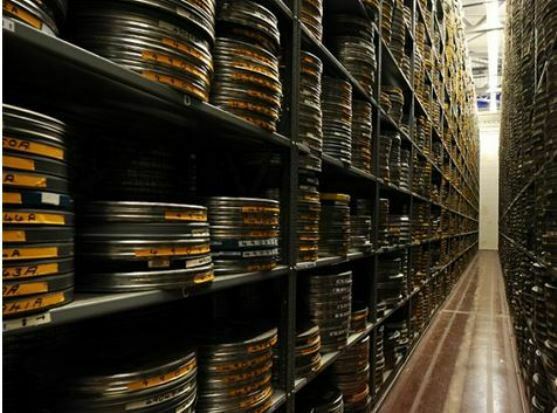
Broadcast archives around the world are in a race against time to preserve valuable audio-visual content before ageing media formats become impossible to recover.
Speaking during Broadcast Media Africa’s webinar on “Identifying, Safeguarding And Managing Risks To Sound And Audio-Visual Archives And Collections,” Jean-Christophe Kummer, CEO of NOA Archives, highlighted the growing urgency facing broadcasters, archives, and cultural heritage institutions worldwide.
According to Kummer, the global archive preservation sector has digitised approximately five million assets between 2000 and 2023 through projects implemented in countries including Austria, France, Germany, Vietnam, and Sudan. However, significant work remains, with around two million additional carriers identified for digitisation in recent years, including a major project in Abu Dhabi involving nearly 400,000 carriers.
Kummer noted that demand for digitisation services has risen sharply over the past two years, particularly across Gulf Cooperation Council (GCC) countries such as Kuwait and the United Arab Emirates, where institutions are increasingly investing in archive preservation programmes.
A key concern, he explained, is the growing risk posed by obsolete media formats. While approximately 90% of archive collections are stored on relatively manageable formats, the remaining 10% consist of highly problematic formats such as 2-inch and 1-inch B videotapes. The availability of functioning playback equipment and technical expertise for these formats is declining rapidly, making digitisation increasingly difficult.
By contrast, formats such as 1-inch C remain more accessible, with playback machines and repair services expected to be available for another three to five years.
Kummer warned that due to the disappearance of specialised equipment and service providers, some archives may ultimately be unable to preserve between 2% and 10% of their holdings.
To address this challenge, he encouraged African broadcasters and archive custodians to adopt a practical approach by focusing first on digitising formats that can still be processed efficiently.
“Start with the good apples,” he advised, emphasising that preserving the majority of accessible content now is preferable to delaying action while attempting to tackle the most difficult formats first.
His message was clear: archive digitisation is no longer simply a modernisation exercise—it is an urgent preservation imperative. As equipment disappears and media continues to age, organisations that act today will be best positioned to safeguard their audio-visual heritage for future generations.
To see Mr Kummer’s views, click on the link here.