





[This article is written by Benjamin Pius (Publisher @ BMA) as part of the forthcoming OTT-Streaming Africa Summit 2026, 24–25 February, Cape Town. Learn more about the event here]
A young entrepreneur in Nairobi wants to catch the latest Premier League match. He has the app, a solid 4G connection, and the desire to watch. But as he reaches the checkout page, he faces a familiar barrier: the platform only accepts international credit cards—a luxury he, like the vast majority of his peers, does not use.
Does he spend an hour hunting for a workaround, or does he switch to a free, ad-supported platform that asks for nothing but thirty seconds of his attention?
For OTT players across Africa, this is not merely a user experience glitch; it is a multi-billion-dollar question.
As the market matures in 2026, the industry is moving decisively past the “one-size-fits-all” subscription model.
Success now depends on economic calibration—matching the right monetisation model to the specific purchasing habits and infrastructure realities of each local market.
The Scale of Opportunity
Africa’s OTT video market is projected to reach US$4.29 billion in 2025, growing at a compound annual rate of 7.9% to hit US$6.27 billion by 2030.
User penetration currently sits at 32% and is forecast to climb to nearly 42% within five years, with an estimated 617 million users by decade’s end. These figures underscore a fundamental truth: the audience is there and growing rapidly. The question is not whether Africans want to stream, but how they will pay for it.
SVOD: The Paywall Paradox
Subscription Video On Demand remains the dominant monetisation model, favoured by 56% of platforms and preferred by 60% of industry respondents in BMA’s 2025 State of Play survey. SVOD provides predictable, recurring revenue and remains the preferred choice for premium content—exclusive dramas, blockbuster films, and live sports. However, high subscription fees relative to local purchasing power and low credit card penetration create what might be termed the “paywall paradox”: the most desired content is often the hardest to pay for.
The response has been a strategic adaptation. This integration of mobile money services has become non-negotiable for reducing churn and expanding accessibility. In markets where 75% of streaming consumption occurs on smartphones, meeting users where they are—on their mobile devices, paying through their mobile wallets—is not a courtesy but a commercial imperative.
AVOD & FAST: Democratising the Screen
Ad-supported Video On Demand and Free Ad-Supported Streaming TV are no longer fallback options—they are growth engines. Globally, FAST channels have surged by 21% in 2025 alone, with nearly 2,000 channels now operating worldwide, and total channels are up 76% since 2023. Hours watched across major free ad-supported services grew by 43% year-on-year, according to Comscore’s 2025 State of Streaming report.
In a market where disposable income is constrained, and data costs remain a consideration, the appeal of “free” is self-evident. FAST channels were expected to launch more widely in South Africa by late 2025, following the Pluto TV model, which has proven successful elsewhere. The Africa Channel, for example, says it has already added an AVOD tier to its Demand Africa platform, alongside FAST channels such as Afro-Cinema, signalling that even established players recognise the strategic value of ad-supported content.
With advances in ad-targeting and AI-driven server-side insertion, brands can now reach highly engaged, mobile-first audiences at scale. AVOD serves as a powerful acquisition tool—often the first point of entry for lower-income or unbanked segments who may eventually upgrade to paid tiers as their circumstances improve. The funnel begins with free.
The Hybrid Model: The Pragmatic Middle Ground
In 2026, the most resilient players are those adopting a value-centric hybrid model. This approach combines the best of all worlds to maximise revenue agility while meeting consumers at their point of affordability.
Tiered Access: Platforms increasingly offer a “free-to-view” tier with advertisements for library content, while reserving premium live events, early-release blockbusters, or ad-free viewing for Transactional (TVOD) or SVOD tiers. Disney+ has already introduced promotional pricing in South Africa to retain price-sensitive subscribers, while the gradual rollout of ad-supported options helps providers maintain competitive pricing without frequent subscription increases.
Telco Bundling: Bundling streaming subscriptions with data plans through Mobile Network Operators remains the bedrock of affordability. It solves both the payment hurdle and the data cost barrier in a single transaction.
Precision Monetisation: Using deep data analytics, platforms can now identify when users are likely to “dip in and out” based on monthly affordability patterns, offering daily or weekly micro-subscriptions that mirror real-life spending rhythms.
The Way Forward: Execution Over Theory
Monetisation in Africa is not simply about choosing between a credit card or a commercial; it is about building an inclusive ecosystem from the ground up. A strategy that works in the high-fibre suburbs of Cape Town will likely fail in the mobile-first streets of Lagos. The numbers bear this out: South Africa accounts for over 75% of the combined OTT subscription base across the continent’s three largest markets (South Africa, Kenya, and Nigeria), yet it is Kenya and Nigeria that show the strongest growth trajectories at 11.2% and 8% CAGR, respectively.
The industry consensus is clear: 100% of respondents in BMA’s survey agreed that broadcasters and OTT platforms should collaborate to share content and monetise more effectively. The era of siloed competition is giving way to structural cooperation—public-private partnerships for infrastructure, content-sharing agreements between traditional broadcasters and digital platforms, and regulatory frameworks that balance innovation with consumer protection.
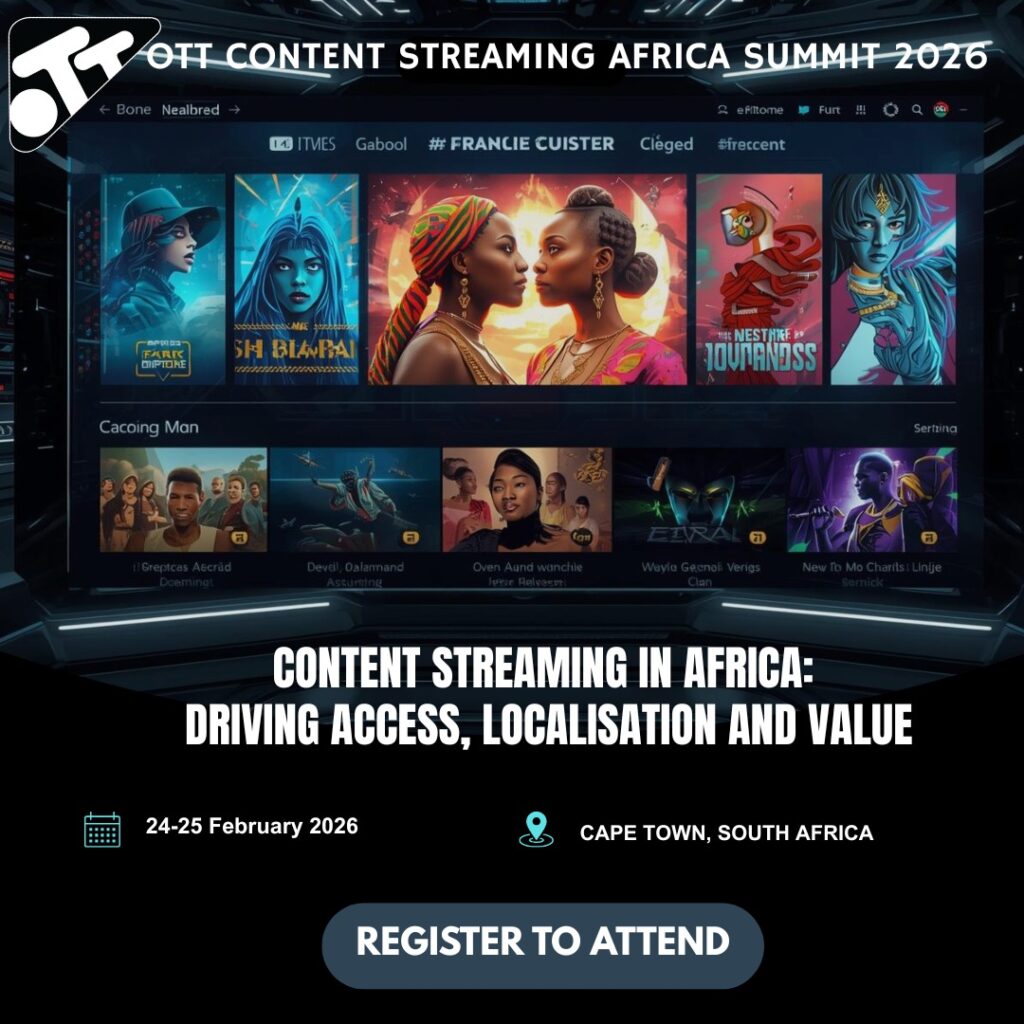
The intersection of these models—and the technology that enables them—will be the core focus of the OTT-Streaming Africa Summit 2026. Hosted by the South African Broadcasting Corporation (SABC) and convened by Broadcast Media Africa, the Summit brings stakeholders together to move beyond theory and share the execution strategies that are actually converting viewers into long-term, sustainable customers.
Because in a market this dynamic, the real expertise lies in the balance.
[This article is written by Benjamin Pius (Publisher @ BMA) as part of the forthcoming OTT-Streaming Africa Summit. Learn more about the event here]