







As artificial intelligence and automation continue to reshape the media industry, the conversation is moving beyond whether machines will replace creative professionals. The more important question for broadcasters and media organisations is how humans and machines can work together to create better content, smarter workflows and more efficient production environments.
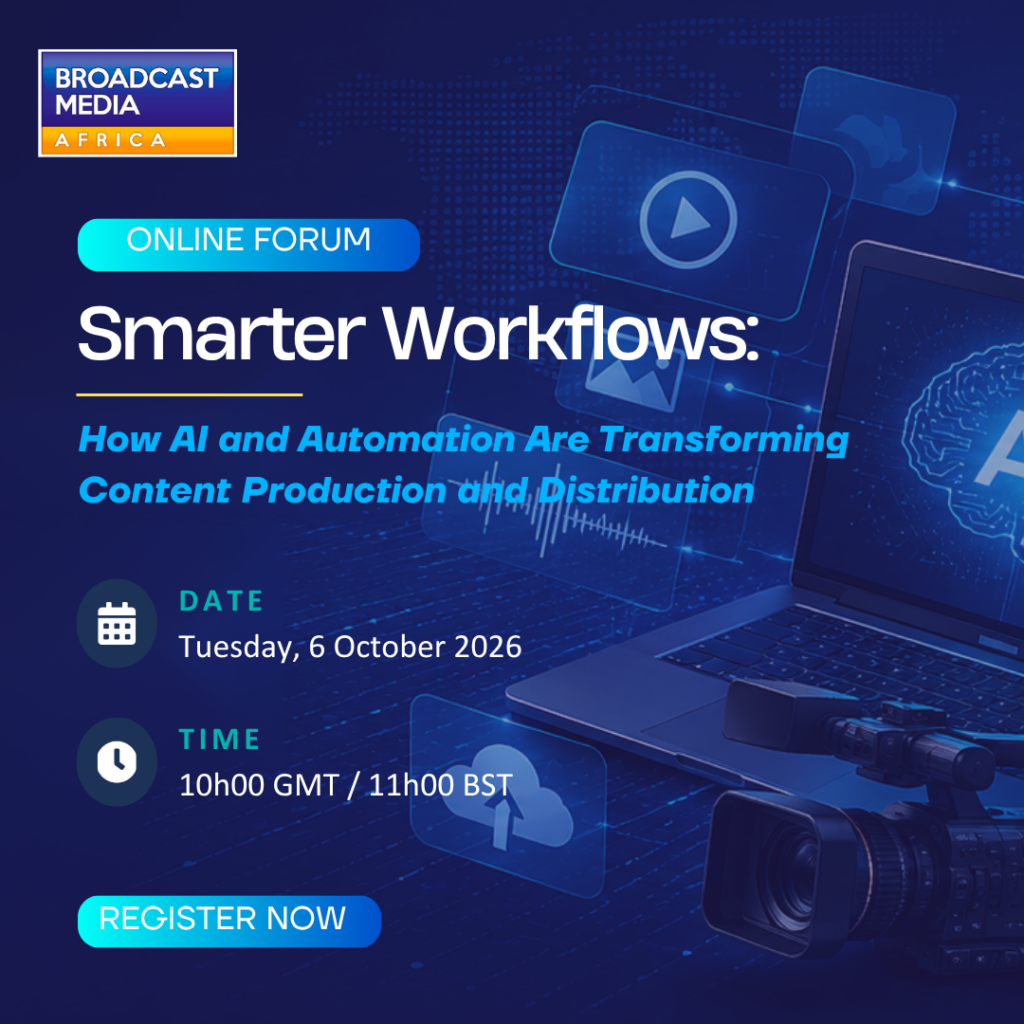
This question will take centre stage at Broadcast Media Africa’s upcoming webinar, “Smarter Workflows: How AI and Automation Are Transforming Content Production and Distribution,” taking place on Tuesday, 06 October 2026.
AI-powered technologies are rapidly becoming part of the content production process, supporting everything from research and ideation to editing, post-production, content packaging, metadata creation and distribution. While these tools can perform increasingly sophisticated tasks, their greatest potential may not be in replacing human expertise, but in augmenting it.
For creative and production teams, AI can take on repetitive, time-consuming, process-driven tasks, allowing professionals to dedicate more time to storytelling, creative development, editorial decision-making, and audience engagement. This emerging model of human-machine collaboration could fundamentally change how content teams are structured and how production workflows are designed.
However, effective collaboration between people and machines requires more than simply introducing new technology. It requires organisations to rethink the skills and capabilities needed across the production environment. As AI becomes embedded in everyday workflows, media professionals will increasingly need a combination of creative expertise, technological understanding, critical thinking, data literacy, and the ability to work effectively with AI-powered tools.
The webinar will explore how broadcasters can build production environments where technology enhances rather than diminishes human creativity. It will examine the changing relationship between creative professionals and intelligent technologies, the importance of human oversight and editorial judgement, and how organisations can prepare their teams for an increasingly AI-enabled media landscape.
The discussion will also consider the practical challenges of integrating AI into existing production workflows. For many broadcasters, the transition will involve more than adopting new tools. It will require investment in skills development, changes to organisational processes and a clear understanding of where automation can deliver value while ensuring that human creativity and judgement remain at the heart of content creation.
As the industry moves toward smarter, more automated workflows, the future of media production is unlikely to be defined by human versus machine, but by human plus machine. Organisations that successfully combine the speed, scale, and efficiency of AI with human creativity, experience, and editorial judgement will be better positioned to innovate, respond to changing audience expectations, and remain competitive.
Broadcast Media Africa’s “Smarter Workflows: How AI and Automation Are Transforming Content Production and Distribution“ webinar will bring together industry experts and media professionals to examine this evolving relationship and explore what the next generation of content production teams will look like.