






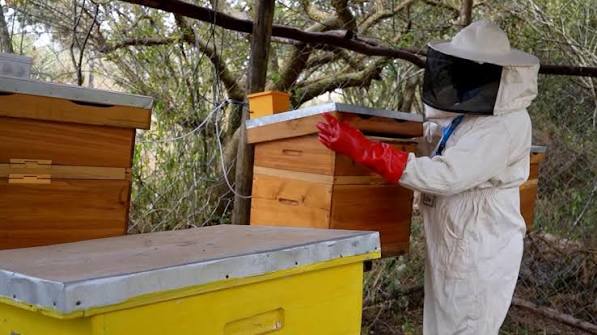
NAIROBI, Kenya — Daystar University researchers have taken apiculture in Kenya by storm as they develop technologies to make beehive activities actionable through digitalisation. Using IoT devices and smart sensors, along with artificial intelligence, Daystar researchers are empowering farmers to track hive conditions and colony safety remotely.
The energy-efficient solution uses acoustic and proximity sensors to collect data on buzzing activity and hive behaviour. With this approach, beekeepers can check hive conditions without opening the hive.
“This is smart farming for bees,” Fredrick Ogore, Daystar University’s AI Implementation Team Leader, stated. “There are AI components in our technologies that can analyse bee behaviours or bee patterns. The passion here is: how can we empower farmers who practice traditional methods to use data from bees?”
In addition to measuring internal conditions, infrared sensors detect external threats, such as predators like honey badgers and monkeys, or thieves. Using LoRaWAN and GSM connectivity, the data is streamed directly to a central digital dashboard, where farmers can monitor their geographically distributed hives through a single application.
Regarding energy requirements, the system runs on an alternating cycle of 30-minute charging and streaming phases. The next phase for the group would be using AI and federated learning to measure bee stress and Colony Collapse Disorder resulting from food scarcity or environmental factors.
Bees are essential for crop pollination. Therefore, this remote monitoring system aims to protect these essential ecosystems and improve agricultural security.
View the full video report below
[This current affairs report item is provided as part of Broadcast Media Africa (BMA)’s mandate to keep Africa’s broadcast media audiences and stakeholders informed on international developments in local and global humanitarian and public service broadcasting.]