







Here is a question worth asking any streaming platform operating on the African continent: of all the African titles in your library, how many were actually watched last month?
In my experience, the honest answer is uncomfortable. The catalogue keeps growing, and the newly digitised archive material keeps arriving. Yet, in many cases, viewers open the app, scroll past rows of imported titles, and give up before they ever reach the good stuff.
The content is there. It cannot be found.
“So a title that cannot be found might as well not exist. For African content, discovery is not a product feature. It should and is the whole ballgame.”
Now, part of the problem is how the recommendation systems on our Streaming platforms might have been built. Most of them learn from global viewing patterns, and global patterns favour global content. So the algorithm keeps serving what is already popular elsewhere, the imported catalogue stays at the top of every screen, and African titles sink further down with each passing week. So, every streaming platform operator in our market should be asking their technology partners hard questions about it.
This issue matters doubly for archived content. Across this series we have talked about the effort now going into digitising decades of African broadcast history. That work only pays off if viewers can actually encounter it. The classic drama, the famous match, the show that everyone actually remembers: these belong in the same recommendation rows as the newest releases and should surface at the right moment to the right viewer.
The good news is AI tools make this genuinely possible now. Nowadays, automated tagging and speech recognition are increasingly becoming capable in African languages, meaning that a fifty-year-old programme can be indexed, searched and recommended just as easily as last week’s premiere.
“Every hour of the digitised archive that goes unwatched is money already spent, earning nothing. Discovery is how the archive investment gets paid back.”
Now, there is the viewer’s side of the story – which in Africa comes with a cost attached. We all know that data is not free; so a viewer who spends ten minutes scrolling before finding something worth watching has paid real money to be lost.
Platforms that take this seriously are rethinking the whole experience: interfaces in the languages people actually speak, previews that do not eat the data bundle, download prompts timed for cheap overnight rates, and home screens that learn what a household enjoys rather than showing everyone the same wall of posters.
In the African marketplace, a platform that respects the viewer’s data and time is bound to keep that viewer and enjoy the benefits of that keep.
This brings me to the reason why I am telling you all of this.
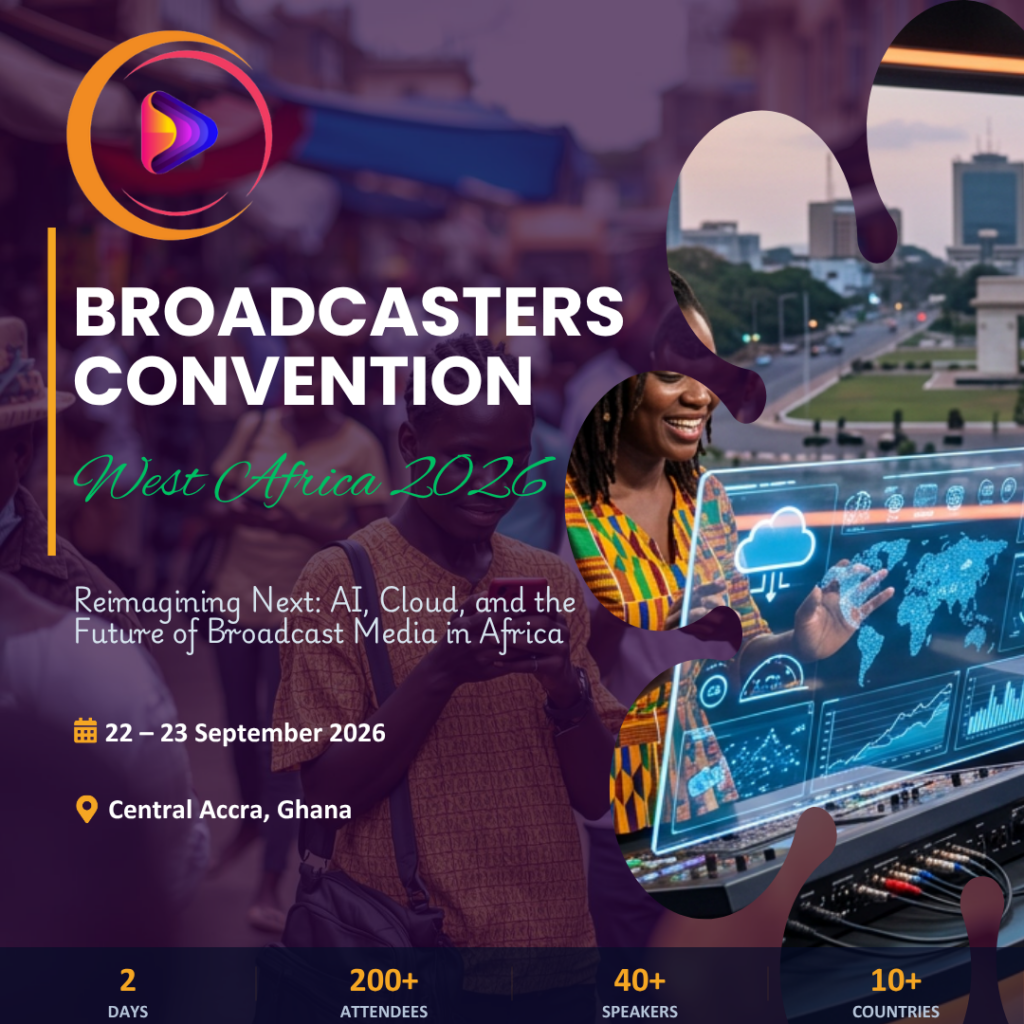
So, the question of how to get this right in practice- from choosing the right AI tools to making local content genuinely discoverable- is firmly on the agenda at the Broadcasters Convention – West Africa 2026, taking place in Accra this September, where platform operators, broadcasters and technology partners will compare notes on what is actually working.
African broadcasters and streamers have spent years, and serious money, building and rescuing wonderful content. The treasure is real. The task now is to stop burying it. See you all in Accra! (Hopefully)!
This article is written by Benjamin Pius (Publisher and CEO @ BMA) as part of the forthcoming Broadcasters Convention – West Africa 2026, 22–23 September 2026, Labadi Beach Hotel, Accra, Ghana.