







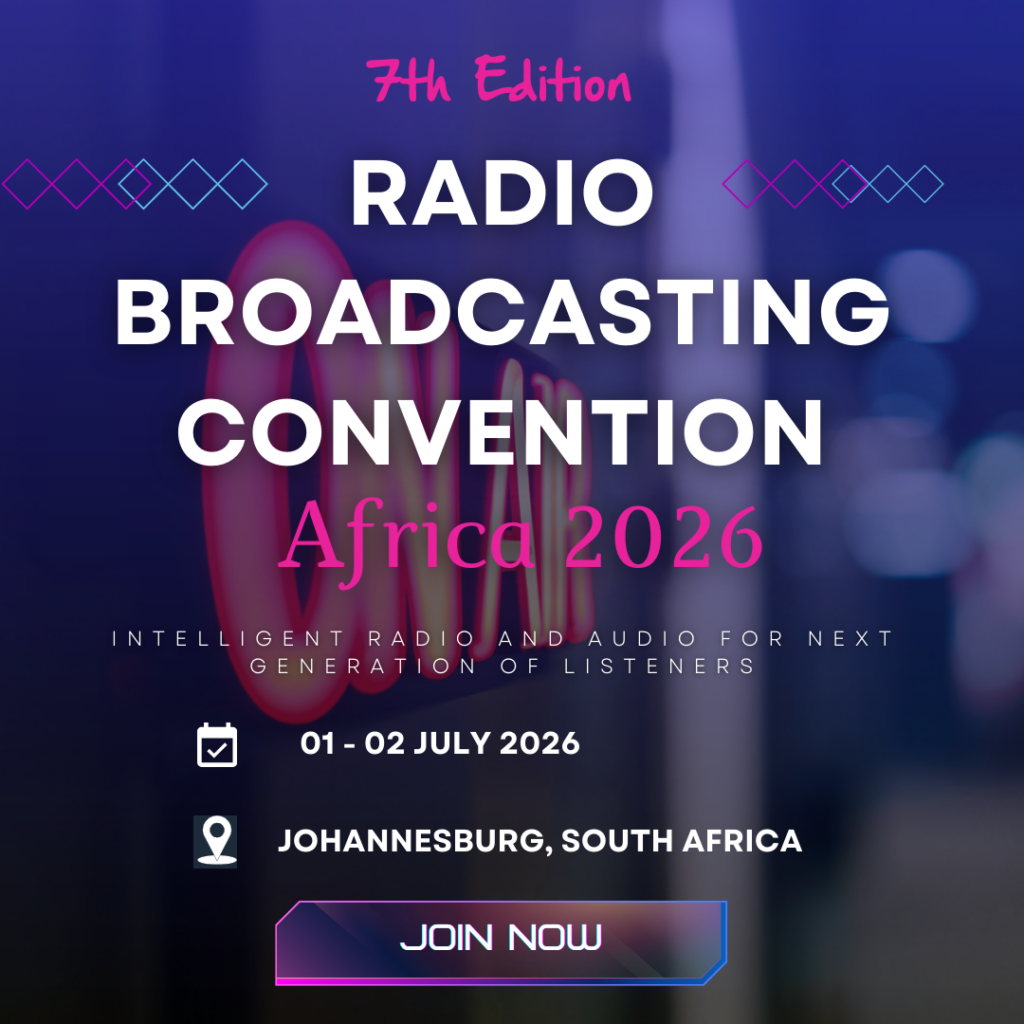
This article is written by Benjamin Pius (Publisher @ BMA) as part of the forthcoming Radio Broadcasters Convention – Africa, 01– 02 July 2026, Johannesburg, South Africa. Register and view the full programme →
Radio has always been more than a medium — it is a conversation between a broadcaster and a community. Yet that conversation is being fundamentally disrupted. Streaming platforms, social media audio, podcasting and AI-generated content have not diminished the appetite for radio; they have raised the bar for what radio must become.
Across Africa — a continent of extraordinary linguistic diversity, mobile-first audiences and rapidly expanding digital infrastructure — this disruption is unfolding faster than almost anywhere else in the world.
The challenge and the opportunity are the same: to develop groundbreaking approaches to content creation and distribution that are not merely fit for today’s digital environment, but also for tomorrow’s.
Today’s audiences — particularly the younger cohorts African broadcasters are keenly courting — are not passive recipients of scheduled programming. They are curators of their own audio experiences, and they expect dialogue, participation and personalisation in return.
The most innovative broadcasters on the continent are those reconceiving their role from publisher to platform: producing content that invites audiences to contribute, share and shape. Interactive formats, community audio journalism, and social media integration are gaining traction precisely because they deepen the bond between the station and the listener.
Where once a radio programme ended at the close of transmission, it now lives on across streaming platforms and podcasting channels — each with its own audience logic and commercial potential.
Podcasting, in particular, represents one of Africa’s most significant untapped opportunities. The continent remains underserved in the global podcasting market, yet mobile data penetration and smartphone adoption are rising steeply. Broadcasters that invest in hyper-local, multilingual on-demand content — and build monetisation into those formats from the outset — stand to capture both audience loyalty and new revenue streams that traditional scheduling cannot reach.
Crucially, innovation must not come at the expense of inclusivity. The audiences least served by digital-first strategies remain among the most loyal radio consumers on the continent. Content and distribution approaches that work across the full connectivity spectrum — from low-bandwidth streaming to community FM partnerships — are not compromises on ambition. They are the fullest expression of it.
The 7th Radio Broadcasting Convention – Africa 2026 arrives at a pivotal moment. The structural shifts reshaping audio consumption globally are accelerating, and Africa’s broadcasters face a clear choice: lead the change or be led by it.
The sessions, debates and connections forged in Johannesburg this July represent a rare opportunity to challenge assumptions, learn from peers and leave with a sharper, bolder vision for the content strategies that will define the next chapter of African radio. The conversation has already begun.
The question is whether the industry is ready to act.
This article is written by Benjamin Pius (Publisher @ BMA) as part of the forthcoming Radio Broadcasters Convention – Africa, 01– 02 July 2026, Johannesburg, South Africa. Register and view the full programme →