






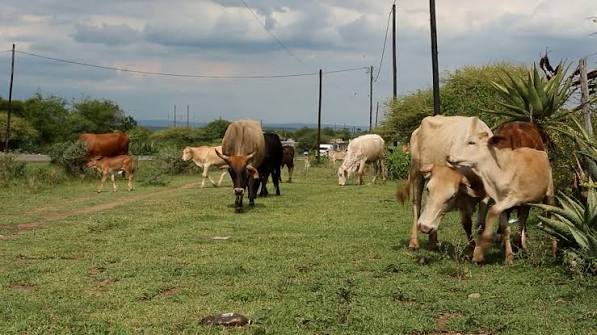
LAVUMISA, Eswatini – A severe drought across Eswatini’s southern Lowveld has killed 99 cattle in the Maplotini community, forcing farmers to slaughter 26 more as water sources dry up and grazing land vanishes.
The crisis unfolds as African leaders at the COP31 climate talks in Turkey press wealthy nations for urgent climate financing. On the ground near Lavumisa, parched fields and scattered cattle carcasses underscore the toll on rural livelihoods.
“Personally, I have lost about six cattle. Three aborted, and three died because of hunger,” said local farmer Stanford Mazibuko. “We are trying to buy the supplements, but the supplements are not enough.”
Communities are anxiously awaiting government-procured hay bales from South Africa. “That will go a long way toward helping farmers cope for now,” noted community developer Sabelo Zulu. Meanwhile, the Ministry of Agriculture is investing in tractors, rakes, and baling equipment across all four regions so farmers can harvest and store summer grass for future dry spells.
Beyond livestock losses, authorities warn that up to 400,000 people—nearly 30 per cent of the population could require humanitarian aid if conditions deteriorate. Integrated Food Security Phase Classification (IPC) data projects roughly 286,000 people will face acute food insecurity through March 2027.
“We are coming with almost a 15 to 20 per cent shortfall in the population in need of support for this period,” said National Disaster Risk Management Authority CEO Victor Mahlalela, as the government seeks approximately $75.45 million to fund its emergency drought response.
View the full video report below
[This current affairs report item is provided as part of Broadcast Media Africa (BMA)’s mandate to keep Africa’s broadcast media audiences and stakeholders informed on international developments in local and global humanitarian and public service broadcasting.]

