







The broadcast industry is undergoing a profound digital transformation. Cloud-based workflows, IP infrastructure, remote production, connected systems, automation and digital distribution are creating greater efficiency and flexibility for broadcasters, but they are also introducing new cybersecurity vulnerabilities.
As the broadcast environment becomes more interconnected, cybersecurity can no longer be viewed solely as a technical responsibility. A resilient defence begins with people, processes and organisational culture. Every employee who accesses a network, handles content, uses a production system or interacts with an external platform can potentially influence an organisation’s security posture.
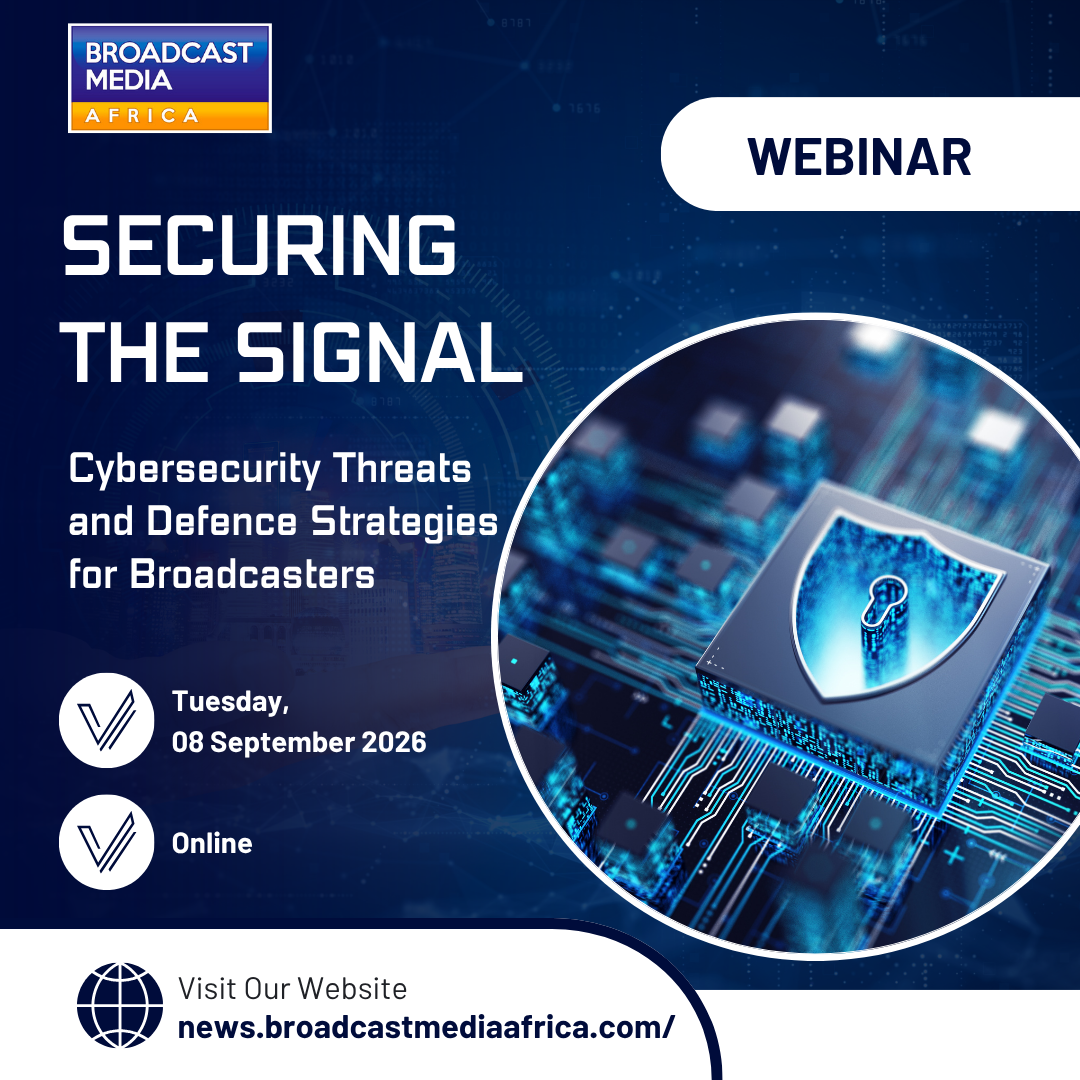
This growing reality will take centre stage at the upcoming webinar, “Securing the Signal: Cybersecurity Threats and Defence Strategies for Broadcasters,” taking place on Tuesday, 08 September 2026.
For many broadcasters, cybersecurity investment has traditionally centred on technical infrastructure. Firewalls, endpoint protection, encryption, monitoring systems and secure networks remain critical, but technology alone cannot eliminate the human and operational risks associated with cyber threats.
A resilient security culture requires organisations to move beyond the idea that cybersecurity belongs exclusively to the IT department. Journalists, producers, engineers, presenters, administrators, executives, freelancers and third-party service providers can all form part of the broader security ecosystem.
Cybercriminals increasingly exploit human behaviour through phishing, social engineering, stolen credentials and other forms of manipulation. Even a highly sophisticated technical environment can be compromised when users are unaware of the risks or when security practices are not embedded into everyday operations.
Creating a security-conscious workforce therefore becomes one of the most important lines of defence.
For broadcasters, the consequences of a cyberattack can extend far beyond data loss. An incident affecting newsroom systems, content archives, production infrastructure, playout, transmission or digital platforms can disrupt the organisation’s ability to deliver content to audiences.
The potential impact can include operational downtime, financial losses, compromised intellectual property, reputational damage and a loss of audience confidence.
This makes cybersecurity an important component of business continuity and organisational resilience. Broadcasters need to be prepared not only to prevent attacks, but also to withstand, respond to and recover from them.
A resilient security culture supports this preparedness by bringing leadership, employees, technology teams, and operational departments into a common security framework. It encourages organisations to regularly review their vulnerabilities, strengthen internal practices, test response procedures and learn from incidents.
The rapid adoption of AI, cloud technologies, remote production and increasingly automated workflows means that the broadcast industry will continue to evolve. This evolution will bring new opportunities, but also new forms of cyber risk.
The challenge for broadcasters is therefore to ensure that security evolves at the same pace as innovation.
“Cybersecurity resilience is ultimately about people as much as it is about technology,” said Benjamin Pius, CEO, Broadcast Media Africa. “Broadcasters can invest in the most advanced security systems available, but resilience depends on whether their people understand the risks, recognise their responsibilities and know how to respond when threats emerge. Building that culture has to become a continuous organisational priority.”
The upcoming “Securing the Signal” webinar will examine why developing this security-first mindset is becoming essential for broadcasters and how organisations can strengthen their resilience in an increasingly connected media environment.
The webinar will help broadcasters, technology leaders, engineers, cybersecurity professionals, and media executives consider how to embed security in organisational culture rather than treat it as a separate technical function.
Learn more and register for the webinar HERE.